Key takeaways
- There is no single UK-wide number of days for every rodent complaint; urgency depends on severity, health risk and cause.
- A landlord should acknowledge the report quickly, inspect, record evidence and instruct pest control where the cause may be structural.
- If rats or mice enter through gaps, drains, damaged brickwork or disrepair, the landlord is usually at risk if they delay.
- Evidence matters: photos, contractor reports, tenant messages and proofing works protect the landlord if a council or solicitor becomes involved.
A rodent complaint should be treated as a health and repair risk, not as a casual tenant gripe. The first job is to establish urgency, cause and evidence before the argument about blame begins.
In older London housing stock, rodents can enter through drains, air bricks, gaps around pipes, defective doors, broken vents or adjoining properties. Delay can quickly become a council enforcement problem, especially where children, vulnerable tenants or food hygiene risks are involved.
What to do in the first 24 hours after a rodent report
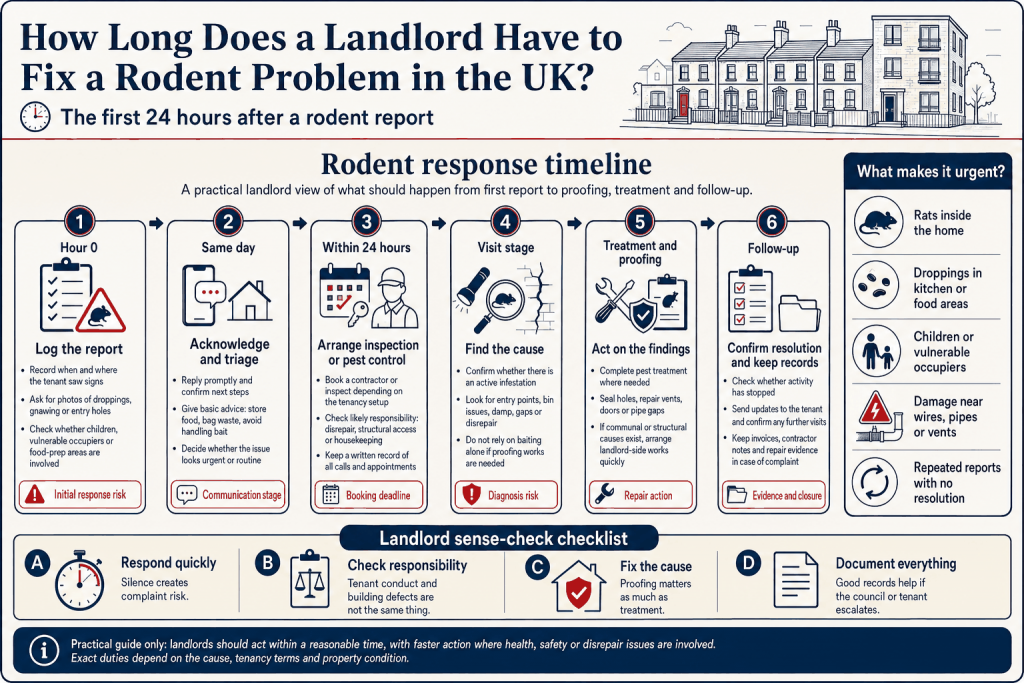
A landlord should acknowledge the complaint, ask for photos or video, confirm where the signs have appeared, and arrange an inspection or pest contractor if the report sounds credible. Waiting to see if the problem disappears is the wrong first step.
The first inspection should check droppings, gnaw marks, entry points, external waste storage, drains, pipe penetrations, communal areas and neighbouring property routes. The issue may be tenant behaviour, but the landlord cannot safely decide that without looking.
The first existing image belongs here. A rodent response timeline is useful because it turns panic into a process: report, triage, inspect, treat, proof, record and review.
Related AMS route: full property management in London.
Who is responsible: landlord, tenant or block manager?
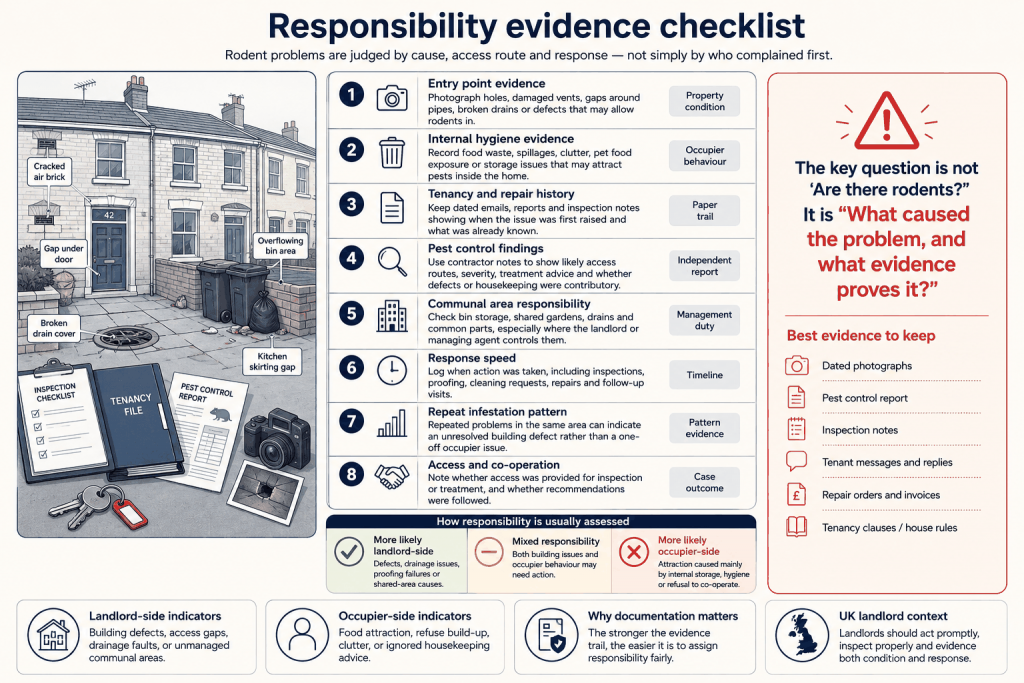
Responsibility depends on cause. If the infestation comes from structural defects, missing proofing, defective drains or poor building condition, the landlord is normally exposed. If it is caused by food waste, poor hygiene or tenant behaviour, the tenant may carry responsibility, but the landlord still needs evidence.
Leasehold flats can involve a managing agent or freeholder where the source is communal drains, bin stores or shared walls. The landlord should not assume the block manager will act unless the issue has been reported formally and chased.
The second image should show evidence needed to decide responsibility: tenancy messages, pest-control report, photos, contractor invoice and proofing record.
Related AMS route: legal and financial property advice.
When a rodent problem becomes a legal or council issue
GOV.UK landlord guidance requires rented properties to be safe and free from health hazards. Councils can inspect under the Housing Health and Safety Rating System where hazards are suspected. Rodents may become part of a wider disrepair, hygiene or fitness issue if the landlord fails to act.
The risk grows when the landlord has been told about the problem and there is no record of inspection, treatment or proofing. A tenant complaint to environmental health can turn a repair into an enforcement file.
This is why the reply to the tenant should be practical and dated. Confirm the report, the next step, the contractor or inspection date, and what the tenant should do with food, bins and access in the meantime.
Related AMS route: rental property compliance inspections.
A practical timeline for treatment and proofing
Minor signs might be inspected and treated within a few days. Rats in living spaces, repeated droppings, children in the home or contamination near food should be treated as urgent. The exact deadline depends on the risk, but a landlord who ignores the report for weeks is creating avoidable exposure.
A proper response has two parts: pest treatment and entry-point proofing. Treatment without blocking access often creates a recurring complaint. Proofing without treating an active infestation may leave the tenant living with the same health risk.
AMS inspections every 4-6 weeks in managed properties help catch signs such as waste build-up, access gaps and damp conditions before they escalate.
Related AMS route: landlord licensing support.
How to prevent repeat infestations in London rental homes
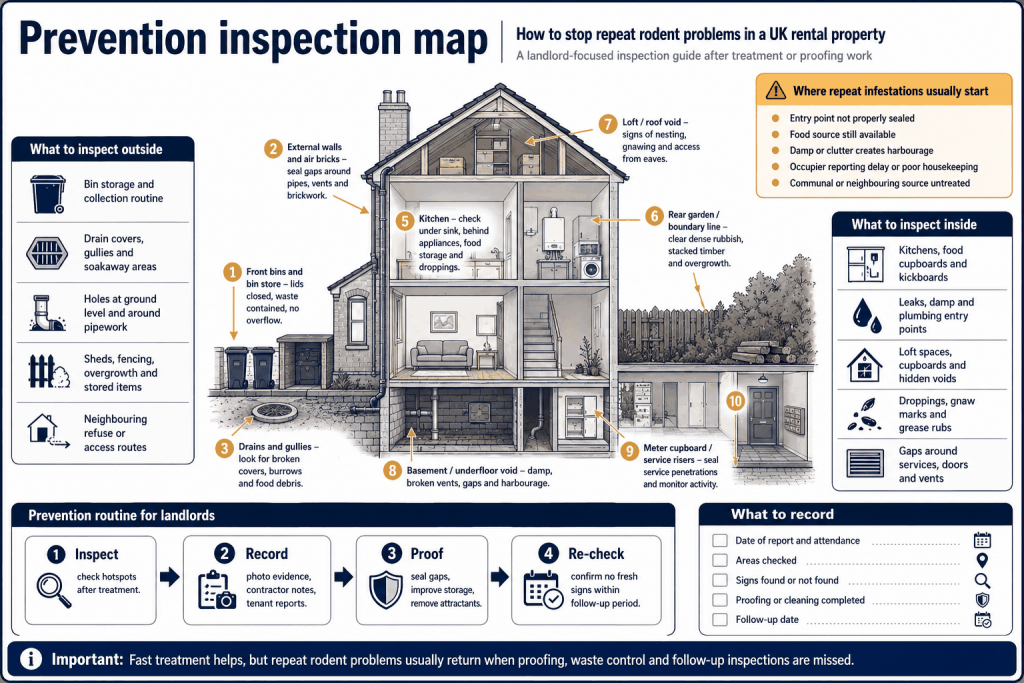
Prevention starts with building condition. Check air bricks, door thresholds, drain covers, holes around pipes, rubbish storage, garden debris and gaps around kitchen units. In terraced streets, an infestation may move between neighbouring properties, so the landlord needs to document what is inside their control.
The third existing image should work as a prevention inspection map. It should show external checks, kitchen checks, communal bin checks, pipe routes and follow-up dates.
Prevention also means tenant communication. A clear note about food storage, bin days and reporting early signs can reduce disputes, but it does not remove the landlord’s repair duties where the building is the cause.
Related AMS route: lettings support for landlords.
Evidence that protects the landlord if the tenant complains
Every rodent report should have a dated record. Keep the tenant message, the landlord acknowledgement, inspection notes, contractor report, photographs, invoices and follow-up message. If a council asks what happened, that timeline is more useful than memory.
Photos should show both the signs of infestation and the remedial work. A picture of a hole before proofing and another after proofing can prevent later disputes about whether the landlord acted.
Where tenant behaviour is a possible cause, the contractor report should say so clearly. It should distinguish food waste, poor housekeeping and clutter from structural entry points, drains or defects.
Why proofing is as important as treatment
Poison, traps or bait may reduce activity, but if entry points remain open the problem can return. Proofing closes the route. That can include gaps around pipes, damaged air bricks, defective drains, holes behind kitchen units and door thresholds.
In terraced London streets, rodents often travel through neighbouring properties and shared runs. The landlord may not control every route, but they can document what they checked and what they repaired within their property.
A repeat infestation should trigger a wider review. If the same area keeps showing activity, the landlord should reassess drainage, waste storage, communal areas, building fabric and tenant waste practices rather than ordering the same single treatment again.
Before closing the repair ticket
Do not close a rodent job after the first treatment visit. Close it only when the contractor has identified entry points, proofing has been completed where needed and the tenant has been given follow-up instructions.
A final review message should confirm what was found, what was done, what the tenant should monitor and when the landlord will recheck if activity continues. That record protects both sides.
Tenant communication that reduces escalation risk
Landlords should respond to a rodent complaint in writing, even if they also call the tenant. A short written message should confirm what has been reported, what access is needed, who is attending and what the tenant should do before the contractor arrives.
The tone matters. Blaming the tenant before inspection usually creates conflict. A better approach is to say the cause will be assessed and responsibility will be considered once the evidence is available. That protects the landlord without dismissing the health risk.
After treatment, send a follow-up note with the contractor’s findings, any proofing completed, tenant housekeeping instructions and the review date. That final message is often what prevents a complaint from becoming a council case.
Final repair-risk check before publication
The landlord should finish with a practical route: acknowledge the report, inspect fast, instruct treatment where needed, proof the entry points and keep dated evidence. That route is clearer than asking for a fixed national deadline that may not exist, and it gives the landlord a defensible record if the matter later reaches the council or a solicitor.
Frequently asked questions
Does a landlord have 24 hours to fix rodents?
Not every rodent issue has a fixed 24-hour deadline, but serious health risks require urgent action. A landlord should triage quickly and document the response.
Who pays for pest control in a rented property?
If the cause is structural or existed before the tenancy, the landlord is usually responsible. If tenant behaviour caused the infestation, responsibility may shift, but evidence is essential.
Can a tenant contact the council about rodents?
Yes. If the landlord fails to respond, the tenant can contact the local council, which may inspect for hazards and require action.
Should landlords use professional pest control?
Usually yes for rats, repeated mouse activity or unclear causes. A contractor report helps solve the problem and protects the landlord’s evidence file.
What landlords should do next
Do not argue about blame before inspection. A fast, documented response is cheaper than a council complaint, disrepair claim or recurring infestation.
For a property-specific view, request a free valuation from AMS Housing Group, or call 020 3793 2247. AMS is based at 29 Longbridge Road, Barking IG11 8TN and works across all 33 London boroughs and Essex.