
Key takeaways
- Plan from annual net income, not monthly gross rent.
- Fixed costs include mortgage interest, insurance, certificates, licences and accounting.
- Variable costs include repairs, voids, tenant changes, service charges and management fees.
- 2026 tenancy changes make weak records and slow repairs more expensive.
- Guaranteed rent can change the cost profile by replacing variable income with fixed monthly income.
Landlord costs in the UK are not one bill. They are a ledger: finance, tax, insurance, certificates, licensing, repairs, voids, management, arrears and the occasional legal problem that can wipe out a year’s profit.
This guide breaks landlord costs into fixed, variable and risk-event costs for London and Essex landlords. It is designed to help owners compare self-management, full management, guaranteed rent and sale with clearer numbers.
Create an annual landlord cost ledger
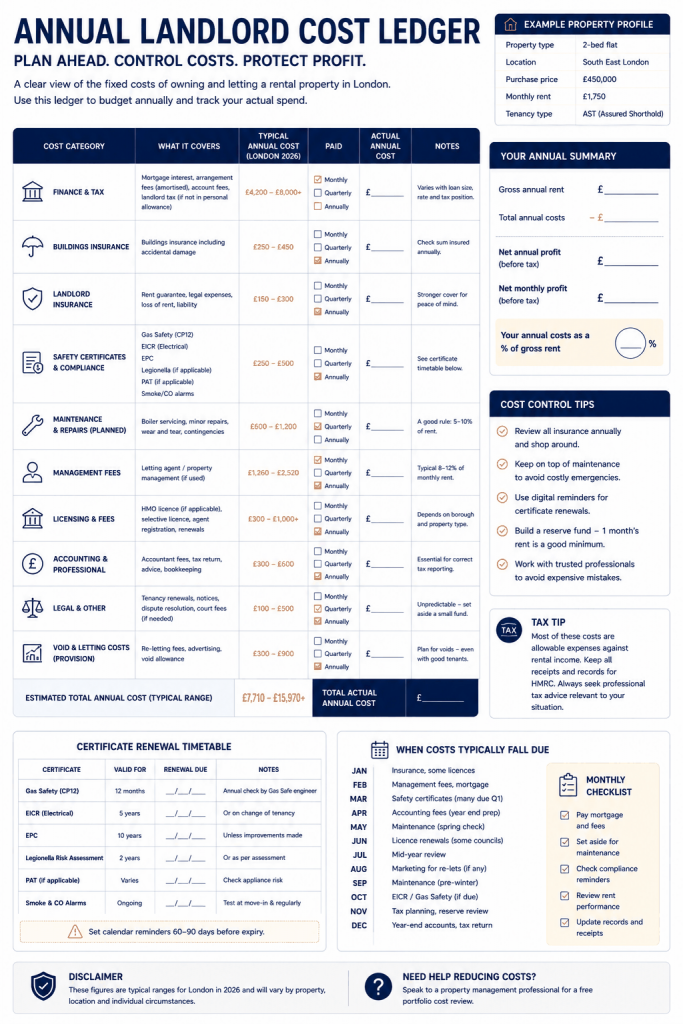
A landlord should start with the full year, not the monthly rent. Gross rent is useful, but it hides the true result. A £2,000 pcm property looks like £24,000 a year until the landlord removes mortgage interest, service charges, insurance, certificates, licence fees, agent fees, repairs, voids and tax.
The cost ledger should be split into three groups: predictable costs, variable operating costs and risk-event costs. Predictable costs include insurance, certificates and mortgage interest. Variable costs include repairs, tenant changes and voids. Risk-event costs include arrears, eviction, major works and enforcement.
The annual-landlord-cost-ledger image should sit here because it gives the reader a practical framework for listing every cost before comparing routes.
Fixed costs landlords can budget for
Fixed costs are the easiest to plan and the easiest to forget. They include buildings insurance, landlord insurance, gas checks, electrical checks, EPCs, accounting, mortgage broker fees, service charges, ground rent where applicable, licence applications and any software or professional support used to manage the property.
Tax is not a fixed fee, but it should be planned. Rental profit is added to other income, and mortgage interest relief rules can create a tax result that surprises higher-rate landlords. London landlords with several properties should also check whether portfolio financing and company structures need qualified tax advice.
AMS often finds that landlords have allowed for the mortgage but not for the certificate, licensing and reserve costs that decide whether the property is really profitable.
Variable costs that damage cash flow
Repairs are not optional. Boilers fail, roofs leak, white goods break, tenants report damp and older London stock needs regular attention. A landlord who budgets nothing for repairs is not making a saving; they are creating a future shock. For ordinary single lets, a sensible reserve is often more useful than chasing the very top rent.
Voids are another quiet cost. A property empty for one month loses 8.3% of annual rent before any re-letting fee is included. If the landlord has to redecorate, replace furniture or correct compliance issues before re-marketing, the gap widens. HMOs and student lets can have higher turnover costs even when gross yield looks strong.
These costs explain why a lower fixed income can sometimes beat a higher variable income over a full year.
The 2026 rules changed risk costs
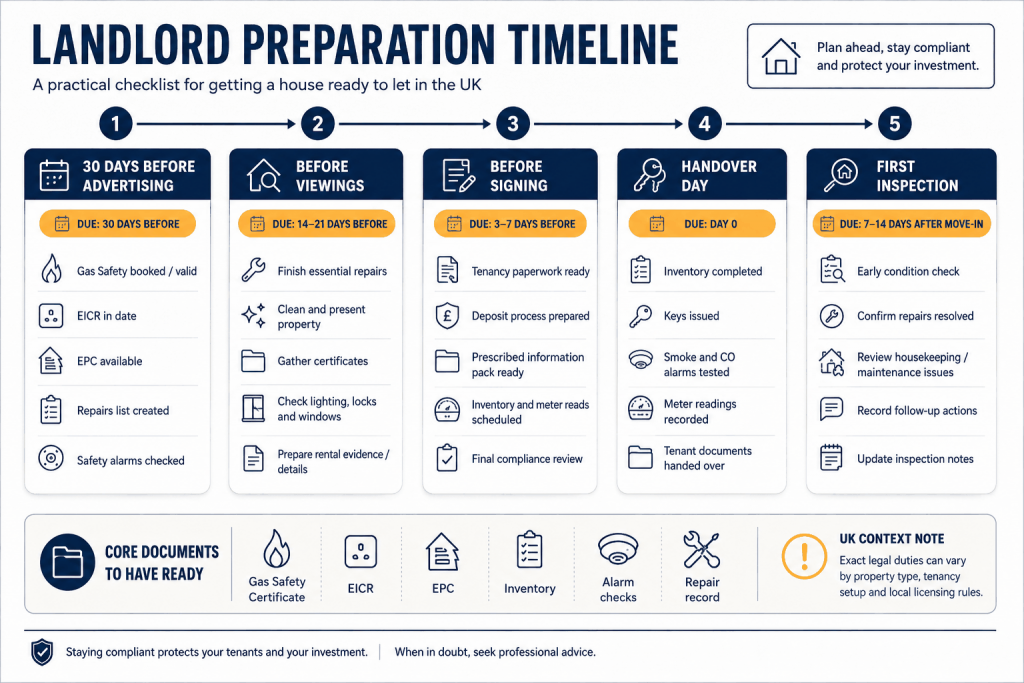
The Renters’ Rights reforms changed how landlords should think about risk. Section 21 has gone, possession is grounds-based, rent increases have a specific process, fixed terms have changed, written tenancy information matters and old templates may create legal or practical problems. The more informal the landlord’s system, the more expensive a dispute can become.
Risk costs include more than legal fees. They include months of unpaid rent, time spent chasing records, emergency contractor costs, council correspondence, tenant complaints and delayed re-letting. A landlord who has not kept certificates, repair proof and tenant communications in one place may spend heavily just to reconstruct the file.
The new-risk-cost-timeline image belongs here because it shows how weak management turns into cash-flow risk after the 2026 reforms.
East London annual cost example
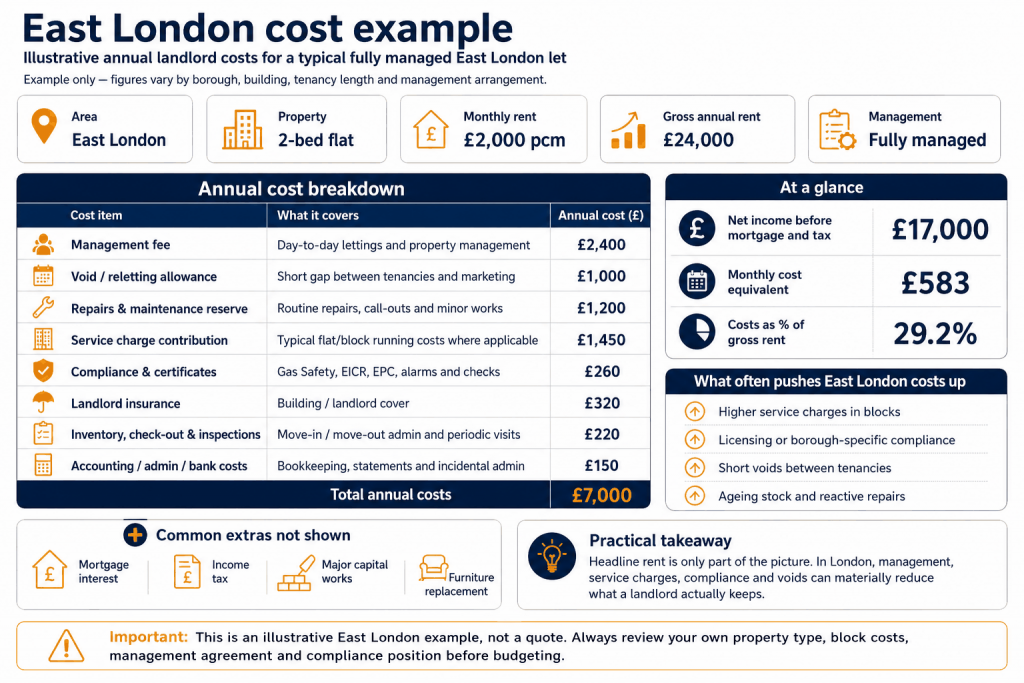
Take a three-bedroom East London house at £2,100 pcm. The gross rent is £25,200 a year. Add 12% plus VAT management, one small void, gas, EICR provision, insurance, repairs, accountancy and occasional licence or renewal work, and the net position changes quickly. The landlord may still do well, but only if they measure the real result.
Under guaranteed rent, the monthly figure may be lower, but the landlord’s income can become fixed and easier to budget. Under full management, the landlord may keep more upside but still carries void and arrears risk. Under self-management, the cash fee looks lower, but the landlord’s time and error risk rise.
The East London cost example image should appear here because it shows the difference between gross rent, managed net rent and fixed guaranteed rent in one landlord-friendly visual.
Three management models, three cost profiles
Self-management has the lowest visible fee but the highest owner involvement. The landlord handles calls, repairs, arrears, compliance dates, disputes and re-letting. Full management adds a clear monthly cost but should reduce admin and improve process. Guaranteed rent usually removes commission and void exposure, but the rent offered is lower than market.
The cheapest route is therefore not obvious. A landlord with time, local knowledge and a good tenant may keep more under self-management. A landlord with a busy job, older property or previous arrears may get a better practical outcome from full management or guaranteed rent.
A proper cost article should help landlords choose the right risk profile, not simply list average fees.
Build a reserve before the property needs it
Every rental property needs a reserve. The amount depends on age, mortgage level, leasehold exposure, boiler age, roof condition, licence requirements and whether the tenant profile creates higher wear. A landlord with no reserve is effectively hoping the property will behave perfectly.
The reserve should cover ordinary repairs, emergency call-outs, void costs, insurance excesses and professional advice. For London leasehold flats, landlords should also watch service charge and major works notices. For HMOs, the reserve should be higher because communal use and fire-safety duties create more touchpoints.
Why annual review beats panic decisions
Review the property once a year as if you were buying it again. Check rent, costs, tax, mortgage rate, repair trend, compliance exposure and local demand. If the property no longer works, choose a route deliberately: improve, refinance, sell, move to management or consider guaranteed rent.
Landlords get into trouble when they make the decision only after a major repair or arrears case. At that point, the figures are emotional. A yearly review keeps the decision commercial.
Choose the route that matches the risk
There is no single cheapest route. A landlord with a low-mortgage, high-demand property may prefer open-market letting. A landlord with arrears history or little time may prefer guaranteed rent.
London cost assumptions that distort landlord profit
London landlords should be careful with national cost averages. Contractor rates, service charges, licence fees, insurance premiums, void periods and management costs can all be higher or more variable in the capital. A safe budget needs local numbers.
The second distortion is time. A landlord who self-manages may pay no monthly fee, but they still absorb calls, viewings, access disputes, repairs, rent chasing and compliance admin. That cost is invisible until work or family time is affected.
The third distortion is risk. One Section 8 claim, major repair or long void can change the year. A useful landlord cost plan therefore has a reserve and a route comparison, not just a list of bills.
Final cost check before choosing a route
Before a landlord chooses self-management, full management or guaranteed rent, the figures should be stress-tested against one realistic bad year. Add one void month, one urgent repair, one certificate renewal and one late payer. If the plan still works, the route is robust. If the profit disappears, the landlord is relying on luck rather than a landlord cost plan.
Frequently asked questions
What is the biggest landlord cost?
For many landlords it is not one bill but the combined impact of mortgage interest, tax, repairs, voids and management.
How much should I keep for repairs?
It depends on age and condition, but every landlord should hold a repair reserve rather than rely on rent covering every surprise.
Can guaranteed rent reduce landlord costs?
It can reduce variable costs and management risk, but the monthly rent is usually lower than market rent.