
Table of Contents
Section 21 Evictions Are Abolished: Landlord Update matters because it can affect money, timing, legal risk and the documents a landlord, tenant, buyer or guarantor may need to rely on later. A quick answer is rarely enough where the property, agreement or deadline changes the outcome.
A safer starting point is the written evidence: the agreement, property address, dates, people involved and records already available. Where the topic is controlled by law or official process, official guidance should be read alongside the actual documents rather than used as a substitute for them.
Most mistakes happen when someone treats section 21 eviction abolished as a yes-or-no issue. The better approach is to identify the specific property, document, deadline and evidence before deciding what to do next.
Why Section 21 is no longer the standard route
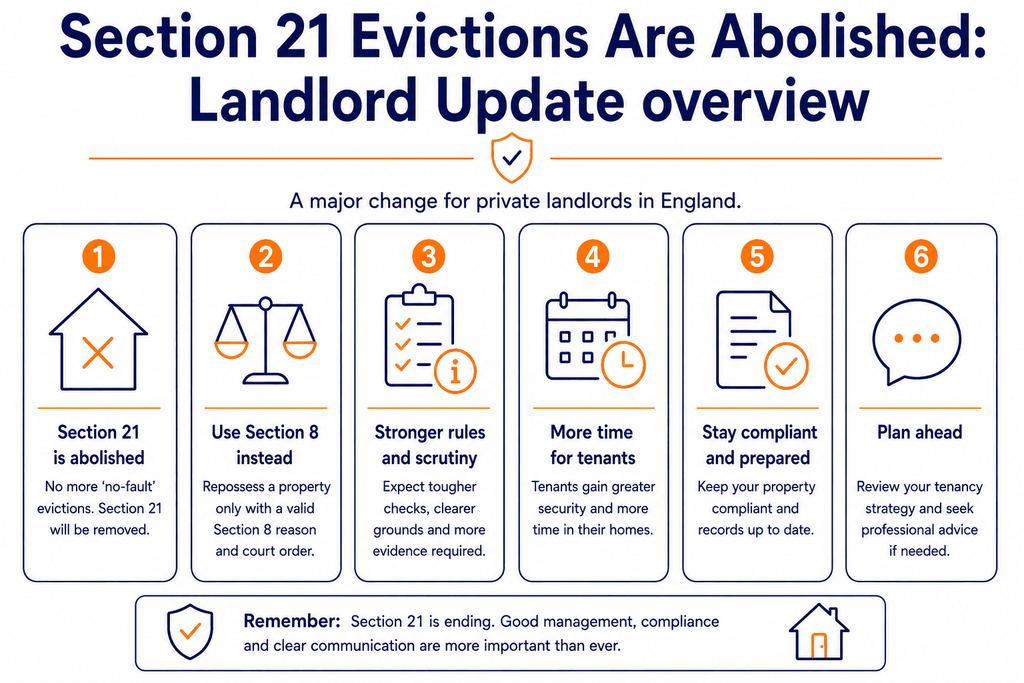
The new private rented sector framework ended the ability to use Section 21 as a no-fault route. Landlords should update old templates and advice immediately. What matters is the connection between the rule and the next decision. If someone is letting, selling, refinancing, evicting, improving or changing how a property is occupied, the supporting evidence needs to exist before money is spent or notice is served.
The practical risk usually sits in the gap between a simple answer and the evidence needed to prove it. A date, certificate, invoice, tenancy clause, consent letter or council licence can decide whether a landlord is protected. Without that evidence, a reasonable decision can become difficult to defend later. The official position is set out in renters rights, which is why the detail should be checked before relying on an old blog post, template or forum answer.
In London and Essex, the local detail can change the cost and timing of a decision because values, rents, leasehold rules, licensing schemes and contractor costs are rarely modest. A small delay can affect a sale timetable, rent collection, tenant relationship or tax bill. A safer approach is to decide what has to be checked, who is responsible for checking it, and where the record will be stored before the next step is taken. Landlords who want the issue handled as part of a wider property plan can compare this with eviction.
Transitional notices served before reform
Some older notices may have had transitional treatment depending on service date. The details should be checked before assuming a notice still works. The important issue is the connection between the rule and the next decision. If someone is letting, selling, refinancing, evicting, improving or changing how a property is occupied, the supporting evidence needs to exist before money is spent or notice is served.
The risk often appears in the gap between a simple answer and the evidence needed to prove it. A date, certificate, invoice, tenancy clause, consent letter or council licence can decide whether a landlord is protected. Without that evidence, a reasonable decision can become difficult to defend later. The official position is set out in possession transition, which is why the detail should be checked before relying on an old blog post, template or forum answer.
In London and Essex, local detail can change the cost and timing of a decision because values, rents, leasehold rules, licensing schemes and contractor costs are rarely modest. A small delay can affect a sale timetable, rent collection, tenant relationship or tax bill. A safer approach is to decide what has to be checked, who is responsible for checking it, and where the record will be stored before the next step is taken. Landlords who want the issue handled as part of a wider property plan can compare this with eviction.
Grounds-based possession after reform
Landlords now need a ground and evidence for possession. The case should be built around facts, not preference. What matters is the connection between the rule and the next decision. When someone is letting, selling, refinancing, evicting, improving or changing how a property is occupied, the supporting evidence needs to exist before money is spent or notice is served.
The practical risk usually sits in the gap between a simple answer and the evidence needed to prove it. The relevant date, certificate, invoice, tenancy clause, consent letter or council licence can decide whether a landlord is protected. Without that evidence, a reasonable decision can become difficult to defend later. The official position is set out in renters rights, which is why the detail should be checked before relying on an old blog post, template or forum answer.
In London and Essex, the local detail can change the cost and timing of a decision because values, rents, leasehold rules, licensing schemes and contractor costs are rarely modest. A small delay can affect a sale timetable, rent collection, tenant relationship or tax bill. The sensible approach is to decide what has to be checked, who is responsible for checking it, and where the record will be stored before the next step is taken. Landlords who want the issue handled as part of a wider property plan can compare this with eviction.
Rent arrears and conduct evidence
Arrears, antisocial behaviour or breach cases depend on records. Rent ledgers, messages and inspection notes matter. What matters is the connection between the rule and the next decision. If someone is letting, selling, refinancing, evicting, improving or changing how a property is occupied, the supporting evidence needs to exist before money is spent or notice is served.
The practical risk usually sits in the gap between a simple answer and the evidence needed to prove it. A date, certificate, invoice, tenancy clause, consent letter or council licence can decide whether a landlord is protected. Without that evidence, a reasonable decision can become difficult to defend later. The official position is set out in renters rights, which is why the detail should be checked before relying on an old blog post, template or forum answer.
In London and Essex, the local detail can change the cost and timing of a decision because values, rents, leasehold rules, licensing schemes and contractor costs are rarely modest. A small delay can affect a sale timetable, rent collection, tenant relationship or tax bill. A safer approach is to decide what has to be checked, who is responsible for checking it, and where the record will be stored before the next step is taken. Landlords who want the issue handled as part of a wider property plan can compare this with property management.
Selling or moving back into the property
Landlords need to use the correct ground and meet the conditions. Planning timing is essential. The important issue is the connection between the rule and the next decision. If someone is letting, selling, refinancing, evicting, improving or changing how a property is occupied, the supporting evidence needs to exist before money is spent or notice is served.
The risk often appears in the gap between a simple answer and the evidence needed to prove it. A date, certificate, invoice, tenancy clause, consent letter or council licence can decide whether a landlord is protected. Without that evidence, a reasonable decision can become difficult to defend later. The official position is set out in renters rights, which is why the detail should be checked before relying on an old blog post, template or forum answer.
In London and Essex, local detail can change the cost and timing of a decision because values, rents, leasehold rules, licensing schemes and contractor costs are rarely modest. A small delay can affect a sale timetable, rent collection, tenant relationship or tax bill. A safer approach is to decide what has to be checked, who is responsible for checking it, and where the record will be stored before the next step is taken. Landlords who want the issue handled as part of a wider property plan can compare this with property sales.
Court costs and delay risk
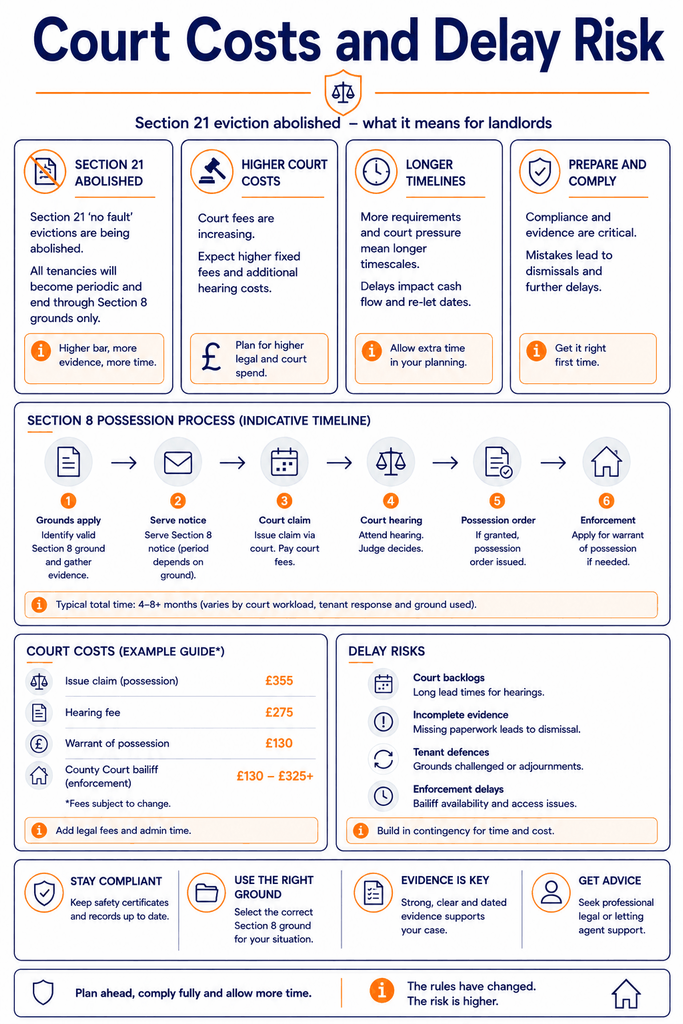
An incorrect route wastes time and money. Professional review is often cheaper than restarting. What matters is the connection between the rule and the next decision. When someone is letting, selling, refinancing, evicting, improving or changing how a property is occupied, the supporting evidence needs to exist before money is spent or notice is served.
The practical risk usually sits in the gap between a simple answer and the evidence needed to prove it. The relevant date, certificate, invoice, tenancy clause, consent letter or council licence can decide whether a landlord is protected. Without that evidence, a reasonable decision can become difficult to defend later. The official position is set out in possession transition, which is why the detail should be checked before relying on an old blog post, template or forum answer.
In London and Essex, the local detail can change the cost and timing of a decision because values, rents, leasehold rules, licensing schemes and contractor costs are rarely modest. A small delay can affect a sale timetable, rent collection, tenant relationship or tax bill. The sensible approach is to decide what has to be checked, who is responsible for checking it, and where the record will be stored before the next step is taken. Landlords who want the issue handled as part of a wider property plan can compare this with eviction.
Updating landlord documents
Tenancy templates, notices and management processes should match current law. A document audit is sensible for every landlord. What matters is the connection between the rule and the next decision. If someone is letting, selling, refinancing, evicting, improving or changing how a property is occupied, the supporting evidence needs to exist before money is spent or notice is served.
The practical risk usually sits in the gap between a simple answer and the evidence needed to prove it. A date, certificate, invoice, tenancy clause, consent letter or council licence can decide whether a landlord is protected. Without that evidence, a reasonable decision can become difficult to defend later. The official position is set out in renters rights, which is why the detail should be checked before relying on an old blog post, template or forum answer.
In London and Essex, the local detail can change the cost and timing of a decision because values, rents, leasehold rules, licensing schemes and contractor costs are rarely modest. A small delay can affect a sale timetable, rent collection, tenant relationship or tax bill. A safer approach is to decide what has to be checked, who is responsible for checking it, and where the record will be stored before the next step is taken. Landlords who want the issue handled as part of a wider property plan can compare this with property management.
Turning the guidance into a property decision
The final step is to turn the information about section 21 eviction abolished into a decision that fits the property. A landlord should write down the answer, the evidence used and any cost or deadline that follows. That record is useful if a tenant, buyer, accountant, solicitor, council officer or insurer asks why a decision was made.
This is especially useful where the property is in London or Essex, because values, rents, licensing rules and contractor costs can make a small mistake expensive. Keeping the decision in writing also helps if management responsibility is shared between the landlord, agent, contractor, guarantor, executor or provider.
A simple decision note should include the property address, date, person responsible, document checked, action required and review date. That sounds basic, but it prevents a common problem: everyone remembers the issue, but no one can prove what was checked or agreed.
Frequently Asked Questions
What is the main thing to know about section 21 eviction abolished?
The main point is that section 21 eviction abolished depends on the exact property, agreement, dates and evidence. A general answer is useful only when it is applied to the real documents.
Which documents should be checked?
Check the tenancy or contract, certificates, invoices, notices, correspondence, photos, official guidance and any mortgage, lease or insurance conditions.
Can this create financial risk?
Yes. Mistakes can lead to lost rent, delayed sales, tax errors, deposit disputes, repair costs, enforcement action or legal fees.
When should professional advice be taken?
Take advice where the issue affects tax, ownership, possession, safety, licensing, immigration checks, commercial leases or large repair spending.