
Key takeaways
- EPCs became mandatory for new lettings in England and Wales from 1 October 2008.
- A valid EPC must be ordered before a property is marketed for rent or sale.
- An EPC rating runs from A to G and is valid for 10 years.
- Most privately rented homes must meet at least EPC E unless an exemption applies.
- Landlords should check the exact current position before publication because future EPC policy has changed several times.
EPCs became a legal requirement for new lettings in England and Wales from 1 October 2008. The current practical rule for landlords is this: order a valid EPC before marketing, show it to prospective tenants and make sure the property meets the current minimum energy standard unless a valid exemption applies.
GOV.UK says an EPC is required when a property is sold, rented out or built, must be ordered before marketing and is valid for 10 years. In 2026, most private rented homes still need at least an EPC E rating. Landlords should not treat proposed future EPC C targets as current law unless the government has enacted them before publication.
This guide gives landlords the history, the current checks and the practical steps before the next tenancy.
The short answer for landlords
If you are letting a property in England, do not start marketing until the EPC position is clear. A valid certificate should be available before adverts, viewings and tenant decisions. If the certificate is expired, missing or below E, deal with it before the property is pushed live.
The date matters because older advice can be misleading. EPCs have existed in sales and lettings for years, but the minimum rating rules came later. Landlords need both: the certificate requirement and the minimum standard requirement.
For a London landlord, EPC also affects rent confidence. Tenants are more aware of energy costs, and poor ratings can reduce demand or create expensive upgrade conversations.
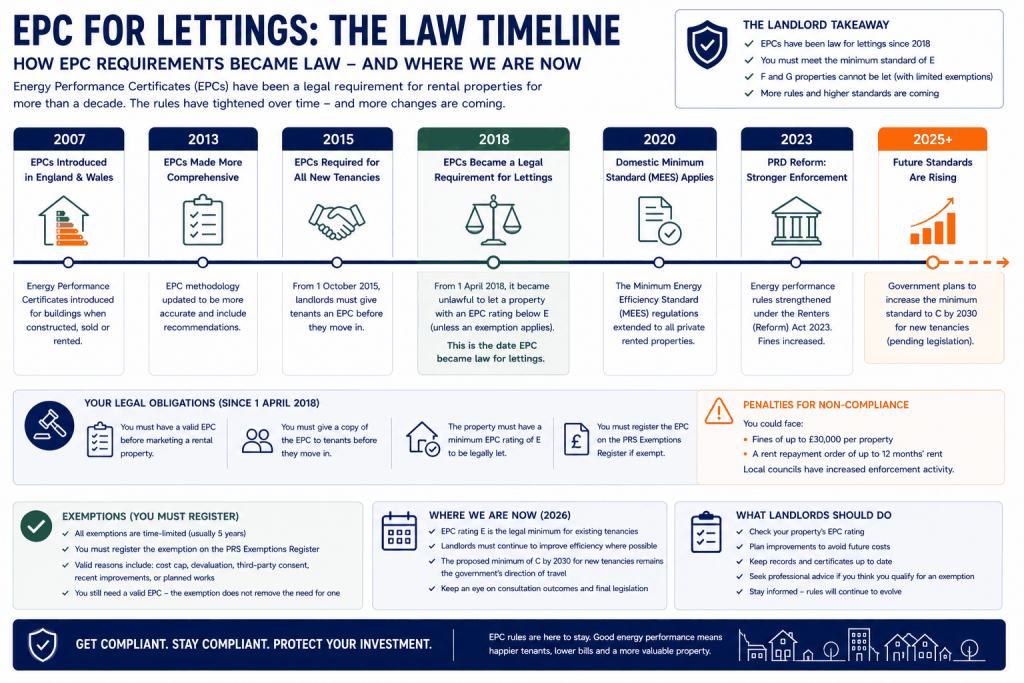
How EPC rules developed
The 2008 lettings requirement made energy information part of the letting process. The landlord could no longer treat energy performance as something a tenant discovered after moving in. The certificate had to be available at the point of marketing and tenant consideration.
The Minimum Energy Efficiency Standards then changed the issue from disclosure to lettability. A property with a very poor rating can become a legal problem, not just a less attractive listing. That is why EPC checks sit alongside gas, electrical, licensing and deposit systems in a modern compliance file.
Because policy has been consulted on and changed over time, landlords should avoid relying on old blog posts about future EPC C deadlines. The live source should be checked before publication and before any major refurbishment decision.
What is required before marketing
GOV.UK says an EPC must be ordered for potential buyers and tenants before a property is marketed to sell or rent. If the property has a valid EPC, landlords can download and use it. If it has expired or cannot be found, a new assessment is needed.
An EPC gives an A to G efficiency rating and is valid for 10 years. That does not mean a landlord should ignore it until year 10. If works have changed the property, if the rating is low or if a new tenancy is planned, it may be sensible to reassess earlier.
Landlords preparing a new tenancy can use an rental property compliance inspection (/compliance-inspection/) to check EPC, safety certificates and licensing before advertising.
Minimum rating rules and exemptions
Most domestic private rented properties need at least an EPC E rating unless a valid exemption applies. A landlord with an F or G property should not market casually and hope to fix it later. Check the current exemption route, improvement cap and evidence requirements before relying on any exemption.
In London, improvement decisions often interact with leasehold consent, service charges, building fabric and cost. A flat in a converted house may have very different upgrade options from a terrace in Barking or a maisonette in Waltham Forest.
If a property is just over the line at E, landlords should still think commercially. Rising energy costs and tenant expectations may make a weak E harder to let at the best rent.
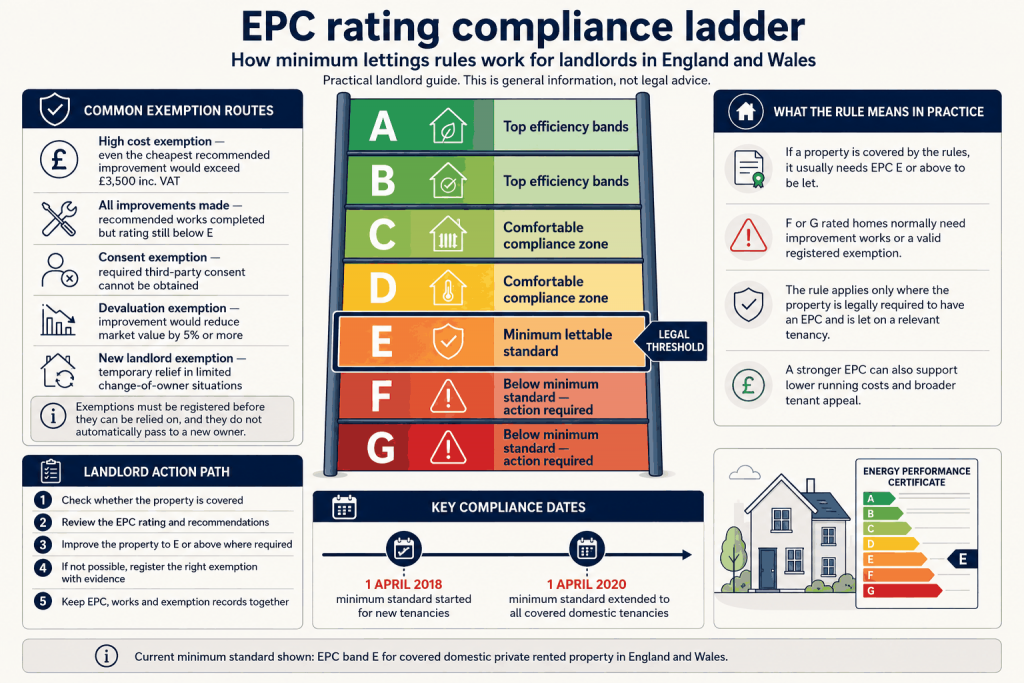
Why EPCs affect more than compliance
EPC issues can affect valuation, rent, mortgage conversations, saleability and guaranteed rent offers. A property with a weak EPC may need a lower rent, a longer void allowance or improvement works before a provider takes it on.
Landlords should compare the cost of improvements with the likely rent and occupancy benefit. Basic loft insulation, boiler controls, draught proofing and heating upgrades can sometimes be more useful than cosmetic improvements, but the right answer depends on the property.
What to check before the next tenancy
Before the next tenancy, check whether the EPC exists, whether it is valid, whether the rating is E or above, whether any exemption is actually registered, whether improvement recommendations are practical and whether the advert will display the rating correctly.
If the property is being re-let, compare EPC checks with lettings support for landlords (/lettings/) and full property management in London (/property-management/) so certificates, rent and repairs are handled together.
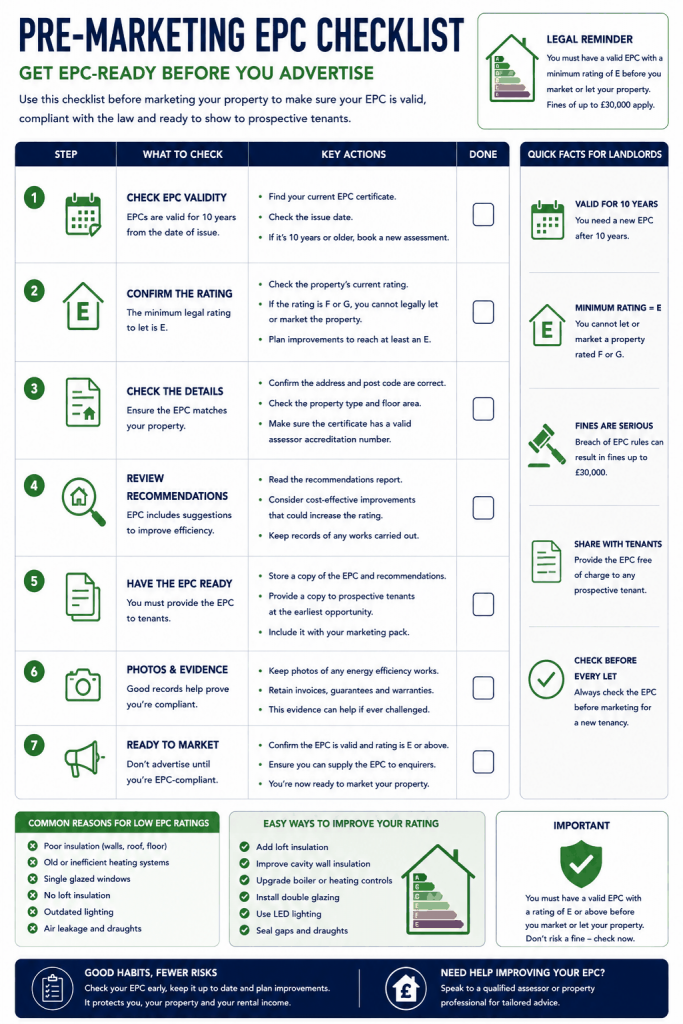
The EPC C confusion landlords still need to watch
Many landlords still remember earlier policy discussions about moving private rented homes to EPC C. The risk is treating a proposal, consultation or abandoned target as if it is already law. That can lead to both under-spending and over-spending.
The current live position should be checked before publication and before any expensive improvement works. As of the factual checks used for this draft, the practical compliance rule remains: valid EPC before marketing and minimum E for most rented homes unless a valid exemption applies.
That does not mean landlords should ignore weak ratings. A low E rating may still hurt tenant demand, energy affordability, refinancing conversations and future sale value.
Improvement budgeting before the certificate expires
A landlord should not wait until the week before marketing to discover the EPC is expired or weak. Energy improvements can require quotes, leasehold consent, contractor availability and tenant access. In a void period, every delay has a rent cost.
Start with the recommendations on the EPC, then separate quick wins from major works. Loft insulation, heating controls, draught proofing and low-energy lighting are often simpler than fabric changes, but the right mix depends on the building.
If the property is a flat, check what belongs to the leaseholder and what belongs to the freeholder or building manager. Some improvements cannot be made by the landlord alone.
How AMS handles EPC before valuation or guaranteed rent
AMS treats EPC as part of the property’s operating risk. Before a guaranteed rent offer or management handover, the EPC rating, expiry date and improvement recommendations help shape the discussion. A weak rating can affect tenant demand, energy-bill concerns and the likely works needed before a tenancy starts.
The EPC is also linked to timing. If a landlord waits until the old certificate expires, they may find themselves trying to arrange work during a void, just when they want income to restart. Checking early gives the landlord time to price improvements and avoid rushed decisions.
For older London stock, especially converted flats and Victorian terraces, landlords should not assume a cheap fix will move the rating. The property’s construction, heating, insulation, glazing and leasehold limits all matter.
The record landlords should keep with the EPC
Keep the certificate, the rating page, the recommendation report, any exemption evidence, invoices for completed energy works and the date the EPC was given or shown to the tenant. If the property later faces a sale, refinance or compliance complaint, those documents are more useful than a memory that the certificate existed.
For portfolio landlords, put EPC expiry dates into the same calendar as gas, electrical, insurance and licence renewal dates. The cost of a late certificate is often the lost rent during a delayed marketing period.
EPC compliance quick check
| Check | Action |
| Is the EPC valid? | Use the government register before marketing. |
| Is the rating E or above? | Do not market F or G without advice/exemption. |
| Is an exemption needed? | Gather evidence before relying on it. |
| Are improvements practical? | Compare cost, rent impact and tenant appeal. |
| Has the tenant been shown the EPC? | Keep evidence in the tenancy file. |
FAQs
When did EPC become law for lettings?
For new lettings in England and Wales, the requirement started from 1 October 2008.
How long does an EPC last?
An EPC is valid for 10 years, but a landlord may choose to renew earlier after major works or before a new marketing campaign.
What is the current minimum EPC for rental property?
Most privately rented homes need at least EPC E unless a valid exemption applies.
Is EPC C already law for landlords?
Do not treat proposed EPC C dates as current law unless they have been enacted. Check official guidance before publication or investment decisions.
Can AMS help check EPC compliance?
Yes. AMS can review EPC status as part of compliance inspection, lettings, property management and guaranteed rent assessment.