
Table of Contents
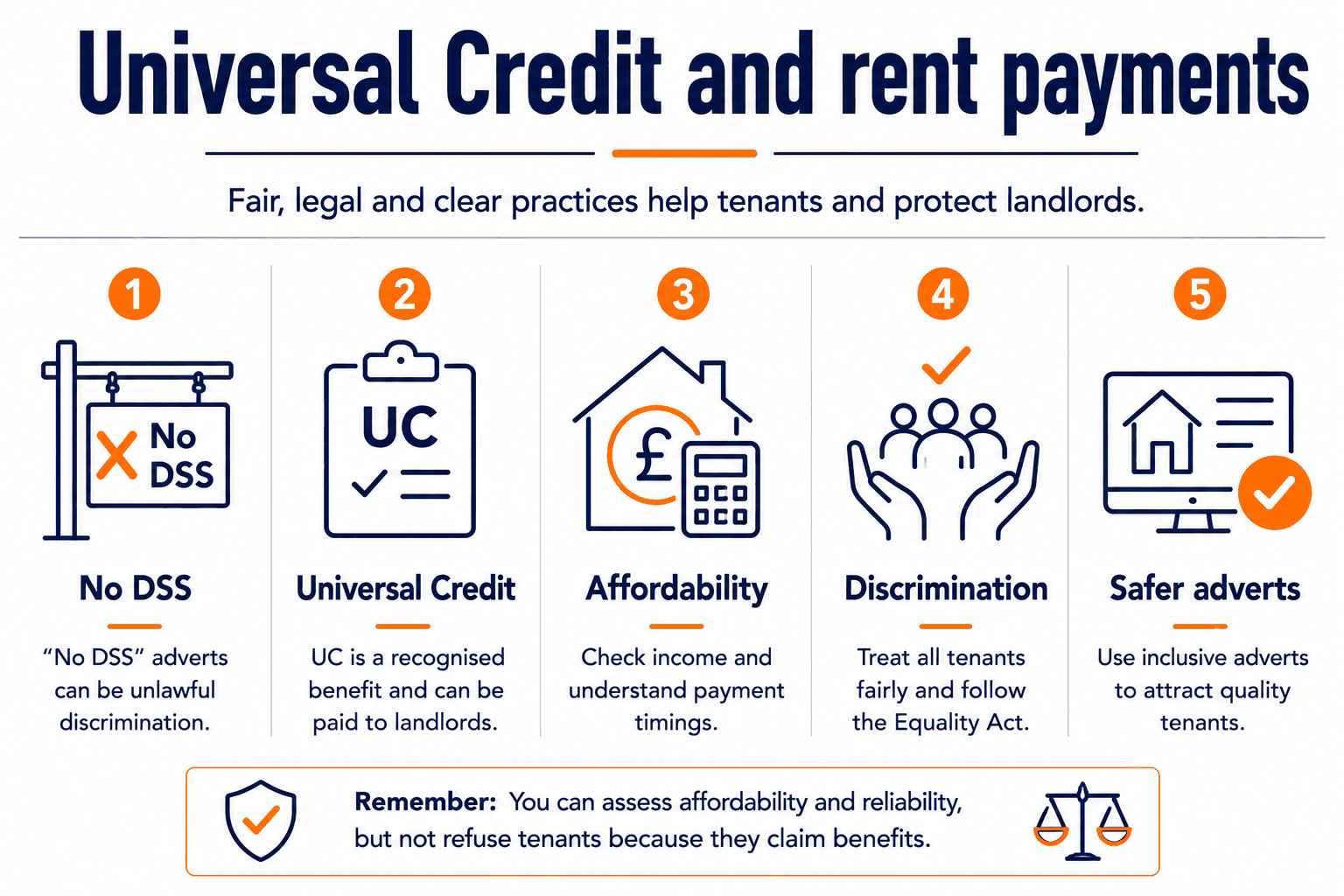
‘No DSS’ is old wording, but the risk behind it is current. Blanket bans on tenants receiving housing benefit or Universal Credit can create discrimination problems and can also exclude good applicants. The safer approach is to assess affordability and suitability individually.
ONS reported average private rent in London at £2,294 in May 2026, the highest regional average in Great Britain. That figure is useful context, but landlords still need property-level evidence because rent, demand and affordability can vary sharply between neighbouring boroughs and even between streets. The source for that market context is the ONS private rent and house price bulletin.
The safest way to approach no DSS tenants is to look at the rule, the money and the evidence together. A landlord may start with one practical question, but the answer often depends on several connected points: no dss, universal credit and affordability. Treating those points separately is how mistakes creep in. The better approach is to decide what needs to be checked before the tenancy or transaction starts, what should be recorded during the arrangement, and what evidence will be needed if the decision is challenged later. That gives the landlord a clearer route from general information to a property-specific decision.
That is why timing matters. Checking the point before a tenancy starts is usually cheaper and simpler than trying to correct it after a dispute, claim, licence query or tax deadline has appeared. A landlord should also think about who will need the evidence later: a tenant, buyer, lender, insurer, council officer, tribunal, accountant or managing agent. The same document can serve several purposes if it is kept properly. A clear rent record can support a tax return and an arrears claim. A dated photograph can support a deposit deduction and a repair history. A certificate can help with compliance and reassure a buyer. Treating records as part of the management system rather than a last-minute admin task makes the property easier to own.
A simple example shows why this matters. A landlord may think the issue is only about one decision, such as a deduction, licence, insurance clause, rent increase or repair. In reality, that decision can affect several later steps. The same facts may decide whether the tenant accepts the position, whether a council sees the property as properly managed, whether an insurer accepts a claim, whether a buyer proceeds, or whether an accountant can defend the treatment in the accounts. When the record is complete, those later conversations are shorter and less risky.
Why No DSS wording is risky
DSS no longer exists as a department name, but the phrase is still used to mean applicants receiving benefits. Blanket wording can create indirect discrimination risk, especially where it disproportionately affects women, disabled people or families.
A landlord can check affordability. The problem is refusing a whole group before looking at the facts.
This part of the decision should be written down rather than left as a verbal understanding. For a landlord, the risk usually appears later: when a tenant challenges a charge, a council asks for evidence, an insurer reviews a claim, or HMRC queries a figure. Keep written notices, service records, affordability evidence and non-discriminatory decision notes in the same property file so the decision can be reconstructed months or years later.
Consistency matters as much as the decision itself. The same checking standard should be applied to every applicant or occupier so the landlord is not relying on assumptions.
For no DSS tenants, the first step is usually to define the position precisely. Vague words create later disagreements: ‘managed’, ‘reasonable’, ‘included’, ‘market rent’ and ‘good condition’ can mean different things to different people. The practical answer is to translate those broad words into evidence, dates, responsibility and cost. The same discipline applies in the property file. If the landlord can point to a clause, certificate, valuation, photograph or dated message, the decision becomes much easier to defend.
Universal Credit and rent payments
Many tenants receive Universal Credit while working, caring or dealing with health issues. GOV.UK’s Universal Credit landlord guide explains how rented housing costs fit into the system and how landlords can understand payment arrangements.
The question is whether the rent is affordable and whether payments can be managed, not whether the applicant receives support.
The practical test is whether another person could pick up the file and understand what happened without phoning the landlord for the story. A clear record should show the date, the reason for the decision, who agreed it, what evidence supported it and what happened afterwards. That level of detail is not bureaucracy for its own sake; it is what turns universal credit from a loose intention into something defensible if the tenancy, tax return, insurance claim or sale later comes under scrutiny.
Reasons should be recorded in neutral, factual language. That protects the landlord if a tenant later argues that a decision was based on a label, personal background or protected characteristic.
This is also where landlords should avoid copying a process from a different property. A leasehold flat above a shop, a family house in Barking, a converted HMO in Newham and a newly bought auction property can all sit under different practical constraints. Mortgage conditions, block rules, council licensing, insurance wording and tenant profile can change what is sensible. A decision that works cleanly for one property can be risky for another, even when the search query looks the same.
Affordability checks without blanket bans
A fair advert can say applicants will be assessed on affordability, references and Right to Rent. It should not say ‘No DSS’, ‘professionals only’ or ‘no benefits’ as an automatic exclusion.
Ask for income evidence, benefit award details where relevant, bank statements if appropriate, landlord references and guarantor information where needed. Apply the same broad affordability standard to all applicants.
Landlords also need to separate the legal rule from the commercial decision. Something can be legally possible but still poor management if it increases void risk, creates a repair dispute, breaches a mortgage condition or makes the property harder to let. Before acting, check the numbers, the paperwork and the likely tenant reaction together. That is especially important in London, where licensing, affordability and property condition can change the outcome of the same decision from one borough to the next.
Timing is often where avoidable mistakes happen. A document served late, a check completed after move-in or a rent notice issued too soon can weaken an otherwise reasonable decision.
The money should be looked at alongside the admin burden. A landlord might save a small amount by handling a task alone, but lose far more if the process creates a void, an invalid notice, a failed claim or a deduction dispute. That does not mean every landlord needs full management. It means the decision should be based on the cost of mistakes as well as the cost of the service.
Mortgage and insurance restrictions
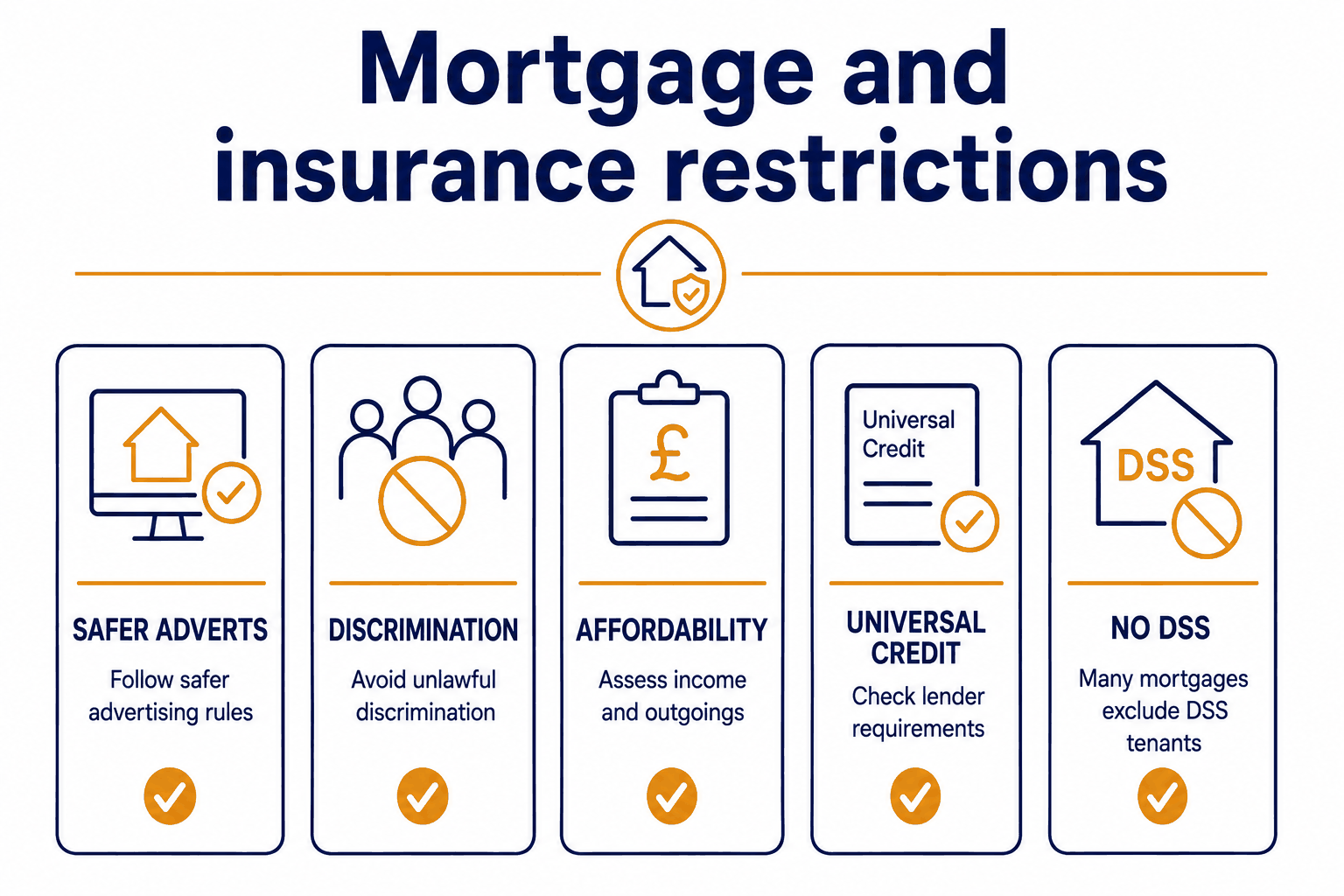
Some landlords say the restriction comes from their lender or insurer. If so, get the wording in writing and challenge outdated terms where possible. The market has moved, and blanket benefit exclusions are increasingly hard to justify.
Do not publish discriminatory wording because an old policy document says so without checking whether an updated product is available.
A useful way to approach this section is to think about the end of the tenancy before the beginning. If the tenant leaves, the property is inspected, or a buyer’s solicitor asks questions, the landlord will need proof of what was agreed and why. Photographs, dated emails, contractor invoices, rent records and certificates are often more persuasive than a later explanation. Good record keeping also makes it easier for a managing agent or solicitor to step in without starting from scratch.
Tenant communication should explain what is being asked for and why. Clear wording reduces friction and gives the landlord evidence that the process was handled fairly.
Tenants also respond better when the position is explained early. Clear move-in documents, prompt repair updates and plain reasons for decisions reduce suspicion and make later discussions easier. Many disputes start because the tenant only sees the landlord’s decision after money is being withheld, rent is being increased or access is being requested. A short written explanation at the right time often prevents the matter becoming formal.
Better adverts and tenancy decisions
A better advert focuses on the property and criteria: rent, deposit, affordability, references, maximum occupancy and whether pets are considered. It avoids labels and treats each applicant on evidence.
Professional lettings and property management can help landlords fill properties while staying within fair-housing principles.
The figures should be tested on a net basis. A headline saving, higher rent, cheaper quote or faster route can disappear once finance costs, compliance work, void periods, tax treatment and repairs are included. Landlords should compare the likely annual position rather than the first monthly figure, and they should update that calculation when the market changes. That gives a more honest view of whether the choice supports reliable income or simply moves risk into a different column.
Where a request is refused, the record should show the evidence behind the refusal. Mortgage terms, lease restrictions, affordability evidence or safety concerns are stronger than a blanket statement.
The final check is whether the decision still works if circumstances change. A tenant may leave earlier than expected, market rent may move, a repair may reveal a bigger defect, or a council may ask for more information. Good landlord planning leaves room for those changes. It does not assume that the smoothest version of events is the only version that needs to be costed or documented.
Frequently asked questions
Can landlords say No DSS?
Blanket No DSS wording is risky and can be discriminatory. Use individual affordability assessment instead.
Can landlords refuse tenants on benefits?
A landlord can refuse where the applicant cannot afford the rent, but should not use a blanket ban.
Can I ask for a guarantor?
Yes, if it is reasonable and applied consistently.
Can Universal Credit be paid to the landlord?
In some cases managed payment arrangements may be possible, subject to the rules.
What should adverts say instead?
Say applicants are assessed on affordability, references and suitability, without excluding benefit recipients as a group.