
Table of Contents
Guaranteed rent and traditional letting can both work, but they suit different landlords. Traditional letting aims for the highest open-market rent, while guaranteed rent focuses on predictable monthly income and reduced day-to-day involvement.
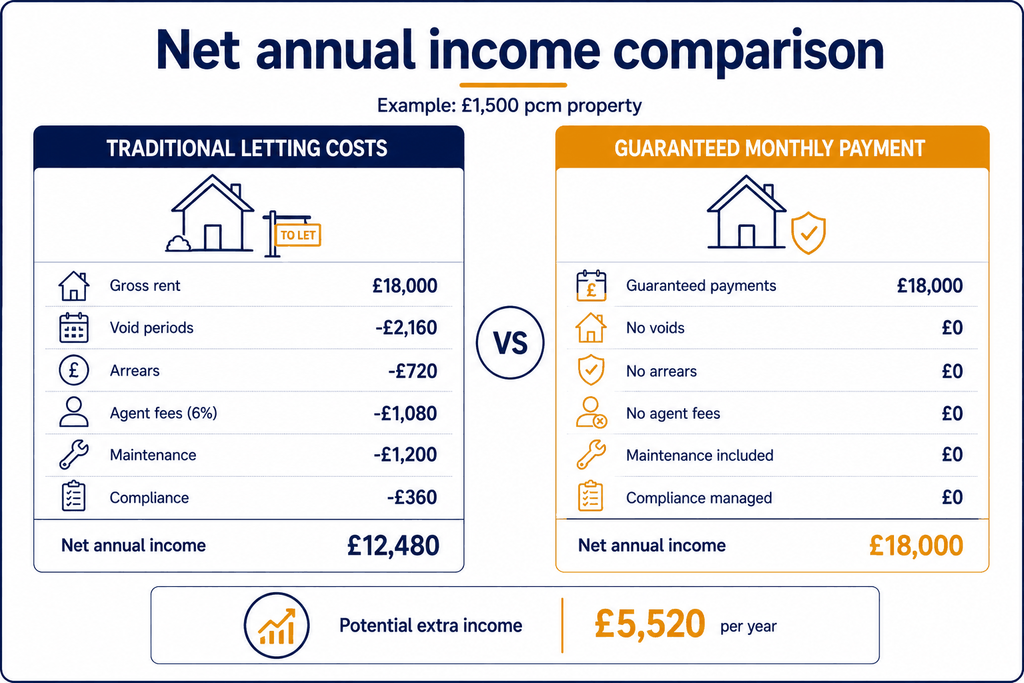
The mistake is comparing only the advertised rent. A landlord should compare annual net income after void periods, letting fees, repair management, arrears, compliance work and time spent dealing with problems.
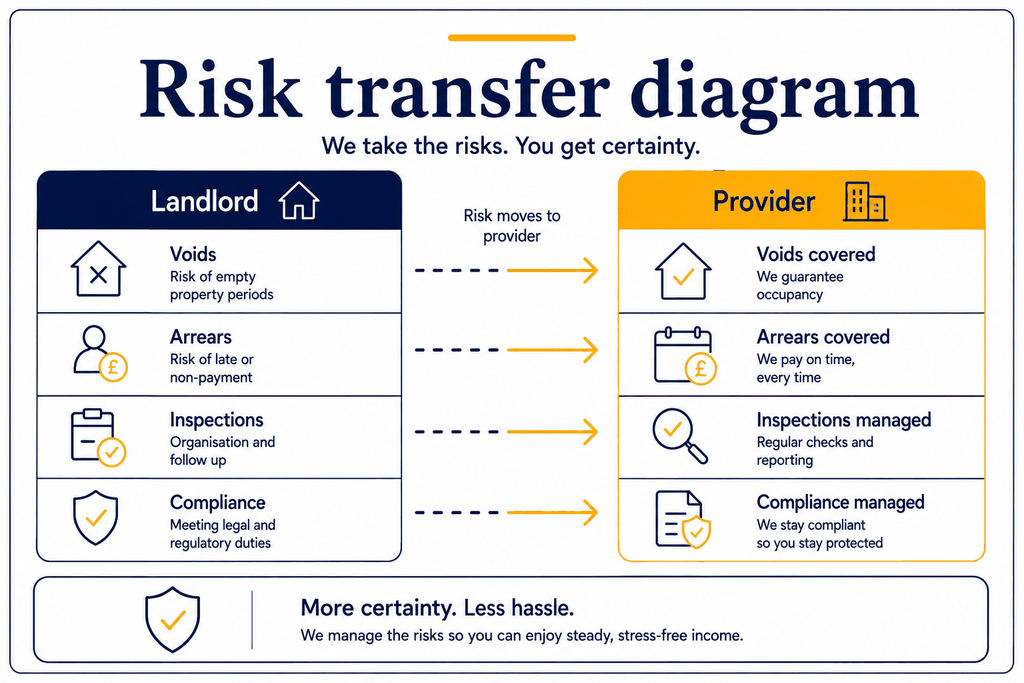
The right choice depends on risk appetite. Some landlords want to maximise every pound of rent and stay involved. Others prefer certainty, regular inspections and a fixed payment even when the property is empty or an occupant falls behind.
Headline rent versus reliable annual income
A higher monthly rent is not automatically better if the landlord carries voids, arrears and management costs. A property advertised at a stronger rent can still produce less over a year if it sits empty, needs repeated remarketing or suffers arrears. What matters is the connection between the rule and the next decision. If someone is letting, selling, refinancing, evicting, improving or changing how a property is occupied, the supporting evidence needs to exist before money is spent or notice is served.
The practical risk usually sits in the gap between a simple answer and the evidence needed to prove it. A date, certificate, invoice, tenancy clause, consent letter or council licence can decide whether a landlord is protected. Without that evidence, a reasonable decision can become difficult to defend later. The official position is set out in ons rents, which is why the detail should be checked before relying on an old blog post, template or forum answer.
In London and Essex, the local detail can change the cost and timing of a decision because values, rents, leasehold rules, licensing schemes and contractor costs are rarely modest. A small delay can affect a sale timetable, rent collection, tenant relationship or tax bill. A safer approach is to decide what has to be checked, who is responsible for checking it, and where the record will be stored before the next step is taken. Landlords who want the issue handled as part of a wider property plan can compare this with guaranteed rent.
Void periods and the cost of an empty property
Void risk is one of the clearest differences between traditional letting and guaranteed rent. Mortgage interest, service charge, council tax, utilities and insurance do not stop simply because the property is empty. The important issue is the connection between the rule and the next decision. If someone is letting, selling, refinancing, evicting, improving or changing how a property is occupied, the supporting evidence needs to exist before money is spent or notice is served.
The risk often appears in the gap between a simple answer and the evidence needed to prove it. A date, certificate, invoice, tenancy clause, consent letter or council licence can decide whether a landlord is protected. Without that evidence, a reasonable decision can become difficult to defend later. The official position is set out in english housing survey, which is why the detail should be checked before relying on an old blog post, template or forum answer.
In London and Essex, local detail can change the cost and timing of a decision because values, rents, leasehold rules, licensing schemes and contractor costs are rarely modest. A small delay can affect a sale timetable, rent collection, tenant relationship or tax bill. A safer approach is to decide what has to be checked, who is responsible for checking it, and where the record will be stored before the next step is taken. Landlords who want the issue handled as part of a wider property plan can compare this with landlord costs.
Repairs, tenant calls and contractor coordination
Traditional letting leaves more repair decisions with the landlord unless a full management package is in place. Guaranteed rent can reduce the admin burden where the provider manages the property, but the contract must define who pays for different categories of work. What matters is the connection between the rule and the next decision. When someone is letting, selling, refinancing, evicting, improving or changing how a property is occupied, the supporting evidence needs to exist before money is spent or notice is served.
The practical risk usually sits in the gap between a simple answer and the evidence needed to prove it. The relevant date, certificate, invoice, tenancy clause, consent letter or council licence can decide whether a landlord is protected. Without that evidence, a reasonable decision can become difficult to defend later. The official position is set out in repairs, which is why the detail should be checked before relying on an old blog post, template or forum answer.
In London and Essex, the local detail can change the cost and timing of a decision because values, rents, leasehold rules, licensing schemes and contractor costs are rarely modest. A small delay can affect a sale timetable, rent collection, tenant relationship or tax bill. The sensible approach is to decide what has to be checked, who is responsible for checking it, and where the record will be stored before the next step is taken. Landlords who want the issue handled as part of a wider property plan can compare this with property management.
Compliance pressure after tenancy reform
The post-2026 tenancy system makes record keeping and lawful process more important, especially around possession and rent increases. A landlord who self-manages must keep dates, notices and evidence organised. A provider should show how those records are maintained. What matters is the connection between the rule and the next decision. If someone is letting, selling, refinancing, evicting, improving or changing how a property is occupied, the supporting evidence needs to exist before money is spent or notice is served.
The practical risk usually sits in the gap between a simple answer and the evidence needed to prove it. A date, certificate, invoice, tenancy clause, consent letter or council licence can decide whether a landlord is protected. Without that evidence, a reasonable decision can become difficult to defend later. The official position is set out in renters rights, which is why the detail should be checked before relying on an old blog post, template or forum answer.
In London and Essex, the local detail can change the cost and timing of a decision because values, rents, leasehold rules, licensing schemes and contractor costs are rarely modest. A small delay can affect a sale timetable, rent collection, tenant relationship or tax bill. A safer approach is to decide what has to be checked, who is responsible for checking it, and where the record will be stored before the next step is taken. Landlords who want the issue handled as part of a wider property plan can compare this with compliance inspection.
Rent reviews, long contracts and market movement
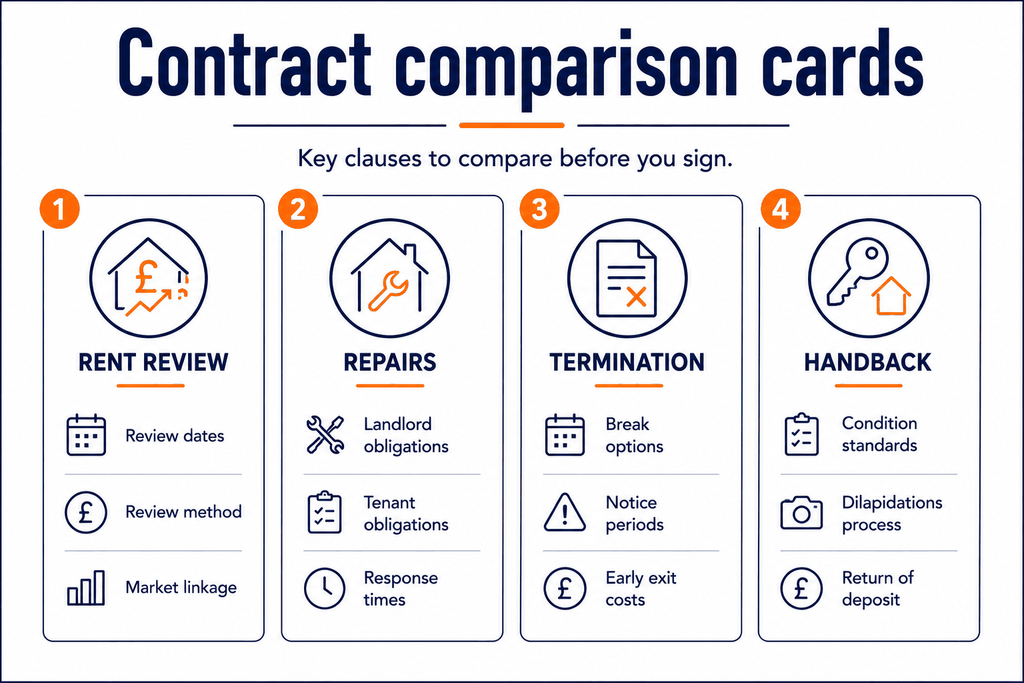
Guaranteed rent agreements often trade flexibility for certainty. A multi-year fixed agreement can protect cash flow, but landlords should understand rent review clauses and break rights before signing. The important issue is the connection between the rule and the next decision. If someone is letting, selling, refinancing, evicting, improving or changing how a property is occupied, the supporting evidence needs to exist before money is spent or notice is served.
The risk often appears in the gap between a simple answer and the evidence needed to prove it. A date, certificate, invoice, tenancy clause, consent letter or council licence can decide whether a landlord is protected. Without that evidence, a reasonable decision can become difficult to defend later. The official position is set out in rent increase, which is why the detail should be checked before relying on an old blog post, template or forum answer.
In London and Essex, local detail can change the cost and timing of a decision because values, rents, leasehold rules, licensing schemes and contractor costs are rarely modest. A small delay can affect a sale timetable, rent collection, tenant relationship or tax bill. A safer approach is to decide what has to be checked, who is responsible for checking it, and where the record will be stored before the next step is taken. Landlords who want the issue handled as part of a wider property plan can compare this with guaranteed rent.
When traditional letting is the better fit
Traditional letting can suit landlords who live locally, have time to manage decisions and want direct control over tenant choice. It may also suit a recently refurbished property in an area with very high demand and low expected voids. What matters is the connection between the rule and the next decision. When someone is letting, selling, refinancing, evicting, improving or changing how a property is occupied, the supporting evidence needs to exist before money is spent or notice is served.
The practical risk usually sits in the gap between a simple answer and the evidence needed to prove it. The relevant date, certificate, invoice, tenancy clause, consent letter or council licence can decide whether a landlord is protected. Without that evidence, a reasonable decision can become difficult to defend later. The official position is set out in landlord responsibilities, which is why the detail should be checked before relying on an old blog post, template or forum answer.
In London and Essex, the local detail can change the cost and timing of a decision because values, rents, leasehold rules, licensing schemes and contractor costs are rarely modest. A small delay can affect a sale timetable, rent collection, tenant relationship or tax bill. The sensible approach is to decide what has to be checked, who is responsible for checking it, and where the record will be stored before the next step is taken. Landlords who want the issue handled as part of a wider property plan can compare this with lettings.
When guaranteed rent is the better fit
Guaranteed rent can suit overseas landlords, busy professionals, portfolio owners and landlords who value certainty over maximum headline rent. It can be especially attractive where missed rent, long voids or slow maintenance decisions would create financial pressure. What matters is the connection between the rule and the next decision. If someone is letting, selling, refinancing, evicting, improving or changing how a property is occupied, the supporting evidence needs to exist before money is spent or notice is served.
The practical risk usually sits in the gap between a simple answer and the evidence needed to prove it. A date, certificate, invoice, tenancy clause, consent letter or council licence can decide whether a landlord is protected. Without that evidence, a reasonable decision can become difficult to defend later. The official position is set out in landlord responsibilities, which is why the detail should be checked before relying on an old blog post, template or forum answer.
In London and Essex, the local detail can change the cost and timing of a decision because values, rents, leasehold rules, licensing schemes and contractor costs are rarely modest. A small delay can affect a sale timetable, rent collection, tenant relationship or tax bill. A safer approach is to decide what has to be checked, who is responsible for checking it, and where the record will be stored before the next step is taken. Landlords who want the issue handled as part of a wider property plan can compare this with guaranteed rent.
Frequently Asked Questions
Is guaranteed rent better than traditional letting?
It depends on whether the landlord values maximum market rent or predictable income and reduced involvement.
Does guaranteed rent cover voids?
A properly written guaranteed rent agreement should pay the landlord even during void periods, subject to the contract terms.
Do landlords get less rent on guaranteed rent?
Usually the monthly figure is below market rent, but the annual net outcome can be better after voids, fees and arrears risk.
What should I compare before choosing?
Compare net annual income, repair responsibility, contract length, inspection frequency, compliance support and exit terms.
What to do next
Landlords comparing fixed income with open-market letting can request a valuation enquiry or read more about AMS guaranteed rent.