
Key takeaways
- Section 21 no-fault eviction has been abolished in England; landlords now need a valid Section 8 ground for most private tenancies.
- The notice is only one step. The landlord still needs evidence, a possession claim, a court order and, if the tenant does not leave, enforcement.
- Rent arrears cases usually fail on poor records: unclear ledgers, missing tenancy terms, unresolved disrepair complaints or weak proof of service.
- London landlords should check licensing, deposit protection, gas, electrical and repair records before serving notice.
- Guaranteed rent or full management can be cheaper than repeated eviction risk when arrears, voids and legal time are included.
Eviction in England is now a grounds-based process. A landlord cannot rely on old Section 21 thinking, a loose arrears spreadsheet or a rushed notice served because the relationship has broken down. The court route starts with a legally valid reason, then depends on evidence.
This guide explains how to evict a tenant in the UK from a landlord’s practical viewpoint, with the focus on England, London and the 2026 Renters’ Rights changes. It is general guidance only. Eviction is a legal process, so landlords should take qualified legal advice before serving notice or starting a claim.
Check the Section 8 ground before serving notice
The first question is not which form to download. It is whether the landlord can prove a valid possession ground. After the 2026 reforms, most private landlords in England must use Section 8, which means the reason for possession has to match the facts. Arrears, anti-social behaviour, breach of tenancy, landlord sale and landlord occupation are not interchangeable. Each ground has its own evidence needs and notice implications.
For an AMS landlord, we would start by building a simple ground file: tenancy terms, rent statement, tenant messages, inspection notes, repair records, deposit proof, licence position and a short chronology. This is not just admin. It is the material that a solicitor or judge will look for if the tenant defends the claim. The mistake is serving notice first and trying to collect evidence later.
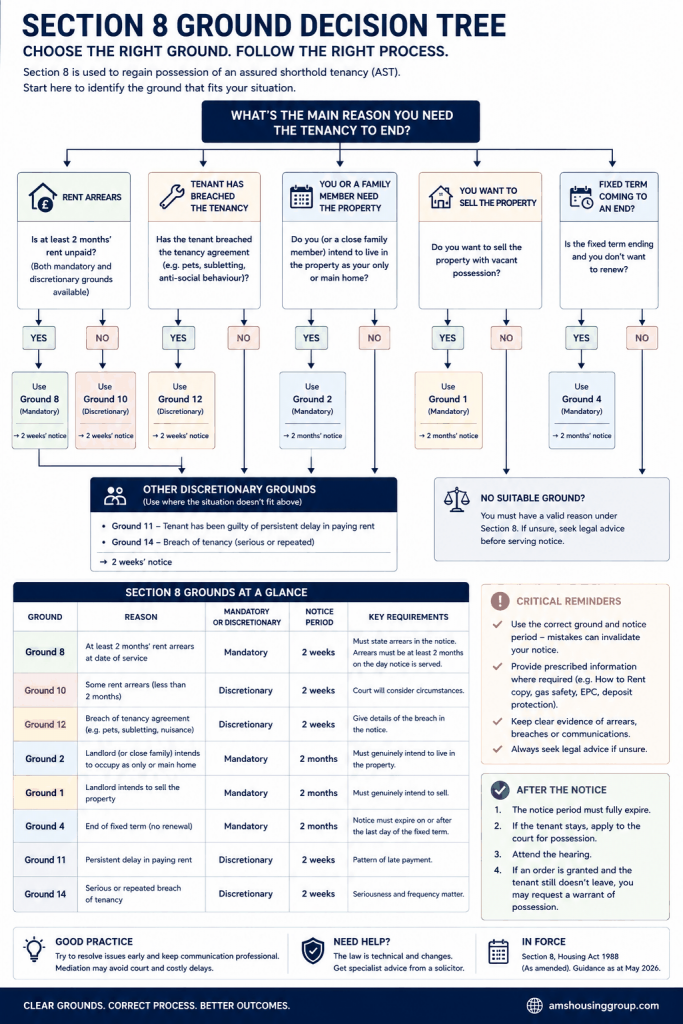
The image below should sit here because it turns the legal choice into a decision tree. It helps a landlord decide whether the issue is arrears, sale, breach, behaviour, or another possession ground before action is taken.
Serve the right notice and keep proof of service
A Section 8 notice must identify the correct ground and be served in the right way. Landlords should use the current prescribed form, check the notice period for the ground relied on and keep evidence of service. That evidence could include tracked post, hand delivery notes, email consent where permitted, or a process server record. The method should match the tenancy agreement and legal advice.
This is where many landlords create delay. They use a saved template from before May 2026, use the wrong tenant name, forget a joint tenant, include an unclear arrears figure or serve while a licensing issue is unresolved. A notice defect does not just look untidy. It can force the landlord to restart the process, adding months of lost rent and stress.
AMS normally asks landlords to freeze the timeline before service: what is the ground, what is the evidence, what is the compliance position, and who will handle tenant communications? Once a notice is served, every message may later be read as evidence.
Build the court evidence pack before the hearing
A strong eviction file is boring in the best possible way. It contains the signed tenancy terms, rent ledger, payment history, correspondence, inspection reports, repair records, photographs, compliance certificates, licensing documents, deposit evidence and a short statement explaining what happened. The landlord should be able to show the court that the issue is real, documented and not caused by the landlord ignoring their own duties.
Arrears cases need especially clean figures. A rent ledger should show rent due, rent paid, dates, balance and any payment plans. If the tenant has raised disrepair, pests, damp, deposit issues or harassment allegations, those points cannot be brushed aside. They need evidence of response. A Section 8 claim can become expensive if the possession ground is valid but the landlord’s record keeping is weak.
This section is written around the evidence-pack image. The visual should show the court file as a set of dated records, not just a pile of papers.

Possession order, warrant and enforcement timeline
If the tenant does not leave after notice, the landlord normally applies to the court for a standard possession order. The court may list a hearing, make directions, adjourn the case, or grant an order depending on the evidence and defence. If the tenant still does not leave after the order date, the landlord may need a warrant of possession and bailiff attendance.
The practical point for landlords is timing. Eviction should not be budgeted as a two-week exercise. Legal fees, court fees, lost rent, repairs after possession and re-letting time can easily turn one bad tenancy into a year-changing cost. London court pressure and tenant defences can make timelines longer than landlords expect.
The timeline image belongs here because it helps the reader understand the sequence: ground, notice, claim, hearing, order, warrant, bailiff and re-let. That sequence is what prevents unlawful eviction and false expectations.

How AMS reduces the chance of repeat possession claims
Eviction should be a last resort, not a management model. The best risk reduction happens before move-in: realistic rent, proper referencing, Right to Rent checks, deposit records, written tenancy information, inventory, inspection schedule and quick repair response. After move-in, the key is early arrears contact and a repair trail that can stand up to scrutiny.
The landlord file to complete before court
Before a landlord issues a claim, the file should be complete enough for a solicitor to review without chasing basic facts. The front page should show tenant names, property address, tenancy start date, rent amount, current tenancy status, possession ground, notice date, service method and the action requested from the court. This small summary saves time because everyone is working from the same facts.
Behind the summary, keep the rent ledger, tenancy agreement, deposit evidence, gas and electrical records, EPC, licence position, repair log and tenant correspondence. If the tenant has mentioned disrepair, harassment, benefits, children, pets or affordability, record how the landlord responded. These points may not defeat the claim, but they can affect timing, settlement and credibility.
London landlords should also check whether the property needed a selective, additional or HMO licence. A licensing gap can change the advice quickly. If there is a gap, take legal advice before serving any new notice or filing a claim.
Eviction cost is more than court fees
The visible costs of eviction are court fees and legal fees. The hidden costs are usually larger: unpaid rent, time, stress, repair work after possession, re-letting delay and the risk that the claim is adjourned because the evidence is weak. A landlord who budgets only for the application fee is not budgeting for eviction.
This is why AMS pushes landlords to compare prevention against cure. If a property has repeated arrears or management conflict, a switch to full management or guaranteed rent may cost less than dealing with another possession claim in two years. The right decision depends on the property, tenant profile, rent level and the landlord’s appetite for involvement.
London compliance checks before an eviction claim
London possession cases often depend on facts that are outside the notice itself. A landlord should check selective licensing, additional HMO licensing, deposit records, gas and electrical evidence, repair complaints and access history before starting the claim. These items can affect negotiation, court preparation and the landlord’s credibility.
The more serious the tenant problem, the more tempting it is to rush. That is usually when mistakes happen. A landlord with a clear file can move more confidently because the solicitor is not rebuilding the history from scattered emails and bank statements.
For AMS, the strongest eviction prevention is still good setup: realistic rent, clean referencing, inspection routine, early arrears contact and fast repair handling. Eviction is sometimes necessary, but it should never be the first time the landlord organises the property file.
When settlement may be better than possession
Not every arrears case needs to run to bailiffs. Sometimes a payment plan, surrender agreement, mediation-style conversation or sale with tenants in situ can produce a cleaner outcome. Landlords should not pressure tenants unlawfully, but they can take advice on whether a documented agreement is more practical than months of litigation.
The test is commercial as well as legal. If the tenant can clear arrears, the property is otherwise stable and the landlord wants income, settlement may work. If the landlord needs the property back, has a valid ground and the evidence is strong, possession may be necessary. Either way, the decision should be written down.
Speak to AMS before serving notice
A rushed eviction can be more expensive than a delayed one handled properly. Before serving notice, check the ground, the records, the licence position, the deposit history and the tenant communications. AMS can help landlords review the property file, compare management routes and decide whether eviction, sale, guaranteed rent or a full management reset is the cleaner route.
Frequently asked questions
Can I still use Section 21 in England?
No. Section 21 no-fault eviction has been abolished for most private tenancies in England. Landlords now need a valid possession ground and must follow the correct Section 8 and court process.
Can I evict a tenant myself without court?
Not for an assured periodic tenancy. Changing locks, removing belongings or forcing a tenant out without the proper process can be unlawful and may be a criminal offence.
What is the biggest eviction mistake landlords make?
The biggest mistake is serving notice before checking the ground, evidence and compliance file. Weak records can delay the claim even when the landlord has a genuine problem.