Key takeaways
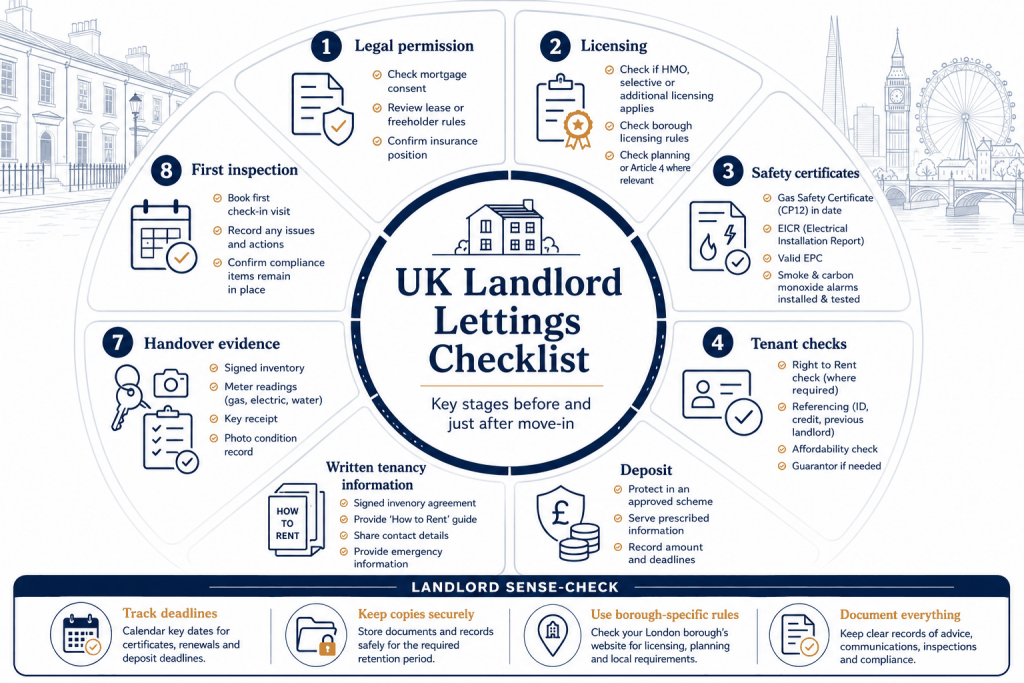
- Check mortgage, lease, insurance, planning and local licensing before advertising.
- Prepare EPC, gas, electrical, alarm and repair evidence before a tenant moves in.
- Written adverts must include the asking rent and should not invite bidding above it.
- Deposits must be protected within 30 days of receipt when they become tenancy deposits.
- The first inspection and rent ledger should be planned before the tenancy starts.
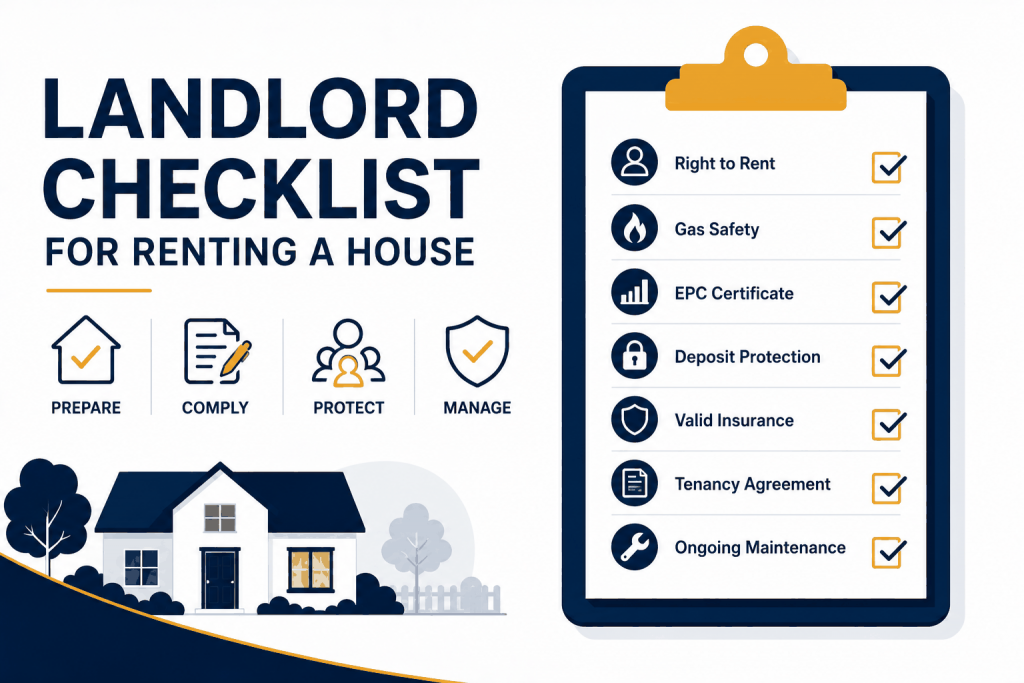
A landlord checklist for renting a house now has to do more than clean the property and find a tenant. Since 1 May 2026, most private rented tenancies in England are assured periodic tenancies, Section 21 has been abolished, and landlords need stronger written records from the start.
For London landlords, the safest approach is to treat letting as a compliance project: check permission, licensing, safety, rent advertising, tenant referencing, Right to Rent, deposit protection, written tenancy information, inventory and first inspection.
Start with permission, ownership and licensing
If the property has a residential mortgage, check consent to let. If it is leasehold, read the lease for subletting, HMO, pets, flooring, alteration and company-let restrictions. If insurance is still ordinary home insurance, update it before advertising.
Licensing is the most common London trap. A property may need mandatory HMO licensing, additional licensing or selective licensing depending on occupation and borough. Do not assume a family house is exempt without checking the exact address.
Use landlord licensing support or rental property compliance inspection if the property is in a borough with changing schemes.
Safety certificates, condition and repair evidence
Core safety evidence should be ready before move-in: Gas Safety Record where gas is present, EICR, EPC, smoke alarms, carbon monoxide alarms and repair evidence. Electrical installations must be checked at least every five years by a properly qualified person. Gas safety needs annual attention where gas appliances are present.
The property should be safe, secure, heated, clean and free from obvious hazards. Walk it like a tenant: locks, windows, heating, hot water, taps, leaks, extractor fans, stairs, garden, meters, bins and appliances.
Photograph condition before viewings and again on move-in day. It protects both the landlord and tenant.
Advert, rent and tenant checks
Set the asking rent using evidence from comparable properties, condition and local demand. Written adverts must include a specific asking rent and landlords cannot ask for or accept offers above it.
Tenant checks should be consistent and fair: identity, affordability, credit profile, employment or income, landlord reference, guarantor checks where needed and Right to Rent for adults in England.
Avoid discriminatory wording such as blanket exclusions for families or benefit recipients. Assess evidence and suitability, not assumptions.
Deposit, written tenancy information and move-in documents
A tenancy deposit must be protected in a government-backed scheme within 30 days of receipt, with the required information provided to the tenant. A holding deposit is different, but once it becomes a tenancy deposit it must be protected.
Post-1 May 2026 tenancies need written information about the tenancy. Old fixed-term AST templates should be reviewed because most private tenancies are now assured periodic tenancies.
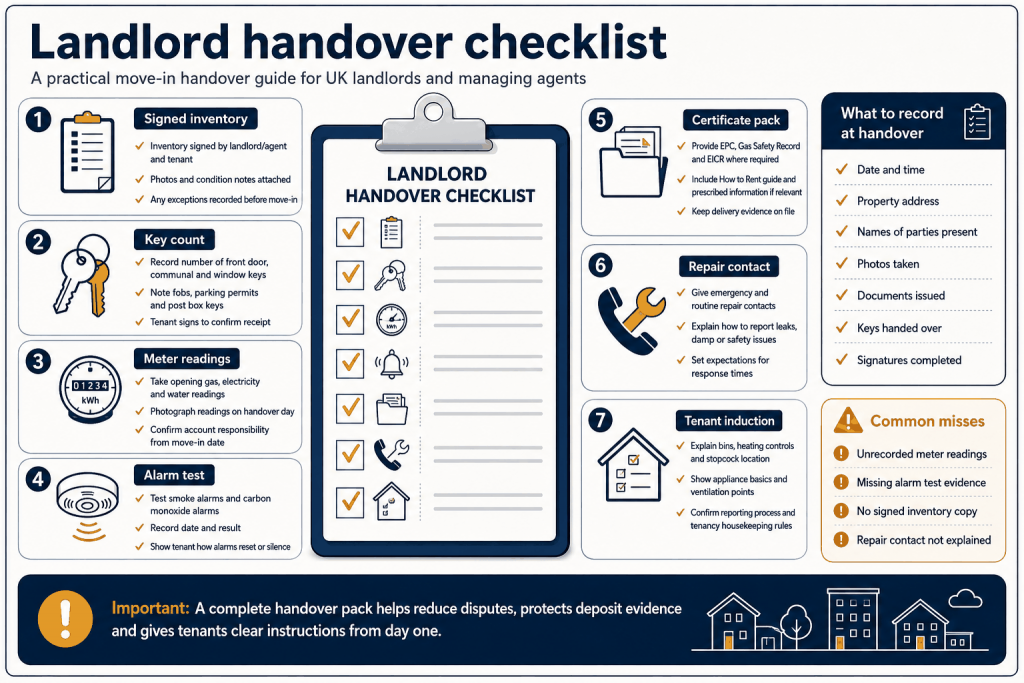
Prepare a handover pack with tenancy terms, deposit evidence, EPC, Gas Safety Record, EICR evidence, alarm test record, inventory, meter readings, key list and emergency repair contact.
Move-in day evidence
Move-in day is where future disputes are often decided. Count keys, photograph condition, record meter readings, test alarms, show the tenant the stopcock and boiler controls, explain repair reporting and agree how urgent issues will be communicated.
An inventory should be specific. “Good condition” is too vague. Record wall colour, flooring, appliances, garden, bathroom sealant, blinds, doors, locks and furniture condition.
Keep a signed or digitally accepted copy. If there is a deposit dispute later, evidence wins.
First 90 days and management setup
The checklist continues after the keys. Schedule an early inspection, set up a rent ledger, monitor repairs and check whether the tenant is using the property as agreed.
Time-poor landlords should compare self-management with full property management in London and AMS guaranteed rent service before committing to ongoing responsibility.
A first-inspection plan for the first 90 days
The first inspection should not feel like a surprise audit. It should be explained before move-in as part of normal property care. The aim is to confirm the tenant has settled in, check repairs, spot condensation risk, test that reporting routes work and deal with small problems before they become disputes.
Check ventilation, bathroom sealant, kitchen leaks, heating, garden, bins, alarms, unauthorised occupants and any pet or furnishing issues. Record findings politely and follow up repairs in writing.
For managed properties, this early inspection also tests the quality of the move-in file. If inventory, keys, meters or alarm records were weak, fix the system immediately rather than waiting for the end of the tenancy.
When a checklist is not enough
A checklist is a strong starting point, but it cannot replace judgement. The risk is higher where the property is an HMO, the landlord lives overseas, the tenancy has a guarantor, the borough operates licensing, the tenant has complex income or the landlord plans to sell soon.
In those cases, the landlord should not rely on a downloadable list alone. They need advice on structure, evidence, responsibilities and the right management route.
AMS can help landlords decide whether the property should be self-managed, fully managed, moved into guaranteed rent or reviewed before letting.
How AMS turns the checklist into a management system
The strongest landlords do not use the checklist once and then forget it. They turn it into a management system with dates, reminders and evidence. Each certificate has an expiry date. Each inspection has notes and photographs. Each repair has a report, approval, invoice and completion record.
This system matters more after the 2026 tenancy changes because possession, rent increases and tenant disputes are more evidence-led. A landlord who cannot find the deposit evidence, alarm test or repair response is weaker when a disagreement starts.
For landlords who do not have time to run that system, the safer option may be full management or guaranteed rent. The cost of management should be compared with the cost of missed compliance, voids and disputes.
A London example of the checklist in practice
Take a three-bedroom house in East London. Before advertising, the landlord checks consent to let, landlord insurance, EPC, gas, electrical, alarms, selective licensing and whether the household type could create HMO issues. The asking rent is set from local comparables and the advert includes one clear price.
Before move-in, references, Right to Rent, deposit protection, written tenancy information, inventory, key list and meter readings are completed. The first inspection is booked for the first 4-8 weeks. Nothing here is glamorous, but it is the difference between a property that is ready to rent and a property that is only ready to advertise.
That is why AMS treats checklists as operational tools. The aim is not paperwork for its own sake. The aim is to make every future rent, repair, inspection and dispute easier to manage.
Why the checklist protects possession evidence later
The letting file created at the start is the file the landlord may need at the end. If rent arrears, damage, repair disputes or possession grounds arise, the landlord needs the agreement, deposit proof, rent schedule, inspection notes, repair records, licence evidence and move-in condition report.
A landlord who builds this file from day one is not being over-cautious. They are preparing for the reality of the 2026 system, where evidence matters more than assumptions and a casual approach can delay resolution.
This is especially important for landlords who self-manage from outside London or who rely on contractors they do not know well. The file is the management memory when people, tenants or agents change.
Printable checklist sample
| Stage | Landlord action |
| Before advertising | Permission, insurance, licensing, EPC and repair condition. |
| Before signing | References, Right to Rent, written terms and deposit process. |
| Move-in day | Inventory, keys, meters, alarm test and certificate pack. |
| First 90 days | Rent ledger, repair follow-up and first inspection. |
FAQs
What does a landlord need before renting out a house?
Permission to let, licensing check, EPC, safety records, tenant checks, deposit process, written tenancy information and inventory evidence.
Do landlords still need to give the How to Rent guide?
In most cases, GOV.UK says landlords do not now need to provide the How to Rent guide after the 2026 reforms.
Can landlords still use fixed-term ASTs?
For most private tenancies in England after 1 May 2026, fixed terms have been banned and tenancies are assured periodic.
Does every house need a landlord licence?
No. Licensing depends on local council rules and occupancy type, but London landlords should check every address before advertising.
What is the safest route for landlords who do not want to self-manage?
Use full property management or guaranteed rent, depending on whether the landlord wants open-market rent or fixed income with less operational risk.
Speak to AMS before you commit
If this decision affects rent, compliance, sale timing or tenant risk, speak to AMS Housing Group before committing. AMS is based at 29 Longbridge Road, Barking IG11 8TN and works across all 33 London boroughs and Essex. Call 020 3793 2247 or use the valuation enquiry route to compare the numbers for your own property.