
Right to Rent Checks
Table of Contents
Right to Rent Checks: Landlord Guide for England matters because it can affect money, timing, legal risk and the documents a landlord, tenant, buyer or guarantor may need to rely on later. A quick answer is rarely enough where the property, agreement or deadline changes the outcome.
A safer starting point is the written evidence: the agreement, property address, dates, people involved and records already available. Where the topic is controlled by law or official process, official guidance should be read alongside the actual documents rather than used as a substitute for them.
Most mistakes happen when someone treats right to rent as a yes-or-no issue. The better approach is to identify the specific property, document, deadline and evidence before deciding what to do next.
Who needs a Right to Rent check
Checks apply to adult occupiers using the property as their only or main home in England. The duty is wider than the named tenant where other adults will live there. What matters is the connection between the rule and the next decision. If someone is letting, selling, refinancing, evicting, improving or changing how a property is occupied, the supporting evidence needs to exist before money is spent or notice is served.
The practical risk usually sits in the gap between a simple answer and the evidence needed to prove it. A date, certificate, invoice, tenancy clause, consent letter or council licence can decide whether a landlord is protected. Without that evidence, a reasonable decision can become difficult to defend later. The official position is set out in right to rent, which is why the detail should be checked before relying on an old blog post, template or forum answer.
In London and Essex, the local detail can change the cost and timing of a decision because values, rents, leasehold rules, licensing schemes and contractor costs are rarely modest. A small delay can affect a sale timetable, rent collection, tenant relationship or tax bill. A safer approach is to decide what has to be checked, who is responsible for checking it, and where the record will be stored before the next step is taken. Landlords who want the issue handled as part of a wider property plan can compare this with lettings.
Online share-code checks
Many tenants prove status using an online share code and date of birth. The landlord must view the official result and keep evidence. The important issue is the connection between the rule and the next decision. If someone is letting, selling, refinancing, evicting, improving or changing how a property is occupied, the supporting evidence needs to exist before money is spent or notice is served.
The risk often appears in the gap between a simple answer and the evidence needed to prove it. A date, certificate, invoice, tenancy clause, consent letter or council licence can decide whether a landlord is protected. Without that evidence, a reasonable decision can become difficult to defend later. The official position is set out in right to rent, which is why the detail should be checked before relying on an old blog post, template or forum answer.
In London and Essex, local detail can change the cost and timing of a decision because values, rents, leasehold rules, licensing schemes and contractor costs are rarely modest. A small delay can affect a sale timetable, rent collection, tenant relationship or tax bill. A safer approach is to decide what has to be checked, who is responsible for checking it, and where the record will be stored before the next step is taken. Landlords who want the issue handled as part of a wider property plan can compare this with compliance inspection.
Manual document checks
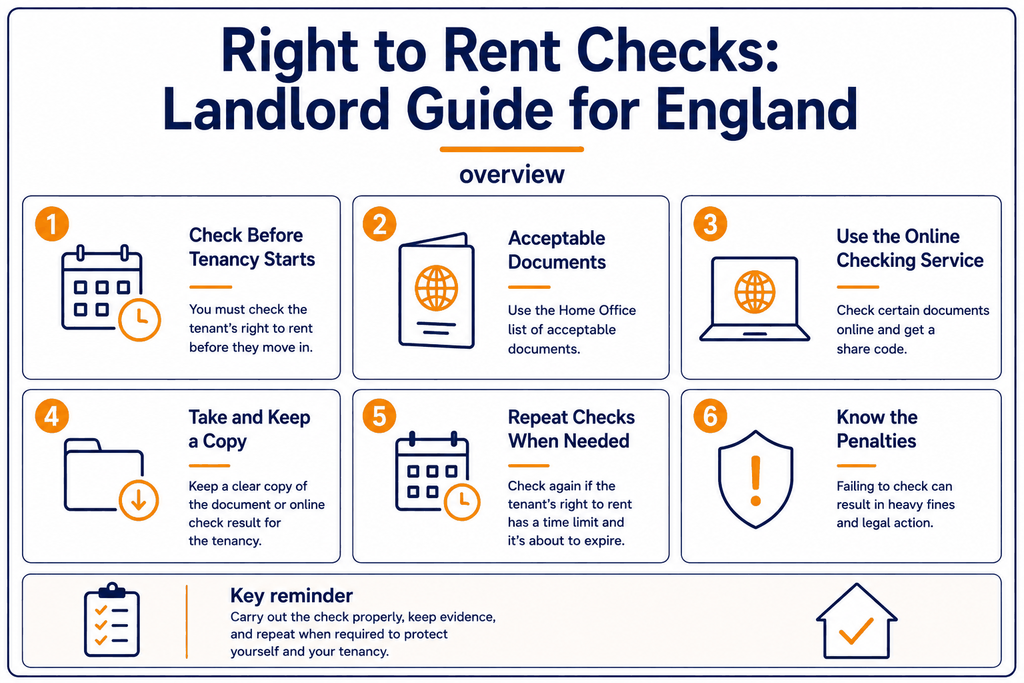
Some tenants still use physical or eligible documents. The check must be done consistently and before occupation. What matters is the connection between the rule and the next decision. When someone is letting, selling, refinancing, evicting, improving or changing how a property is occupied, the supporting evidence needs to exist before money is spent or notice is served.
The practical risk usually sits in the gap between a simple answer and the evidence needed to prove it. The relevant date, certificate, invoice, tenancy clause, consent letter or council licence can decide whether a landlord is protected. Without that evidence, a reasonable decision can become difficult to defend later. The official position is set out in right to rent, which is why the detail should be checked before relying on an old blog post, template or forum answer.
In London and Essex, the local detail can change the cost and timing of a decision because values, rents, leasehold rules, licensing schemes and contractor costs are rarely modest. A small delay can affect a sale timetable, rent collection, tenant relationship or tax bill. The sensible approach is to decide what has to be checked, who is responsible for checking it, and where the record will be stored before the next step is taken. Landlords who want the issue handled as part of a wider property plan can compare this with lettings.
Time-limited right and follow-up checks
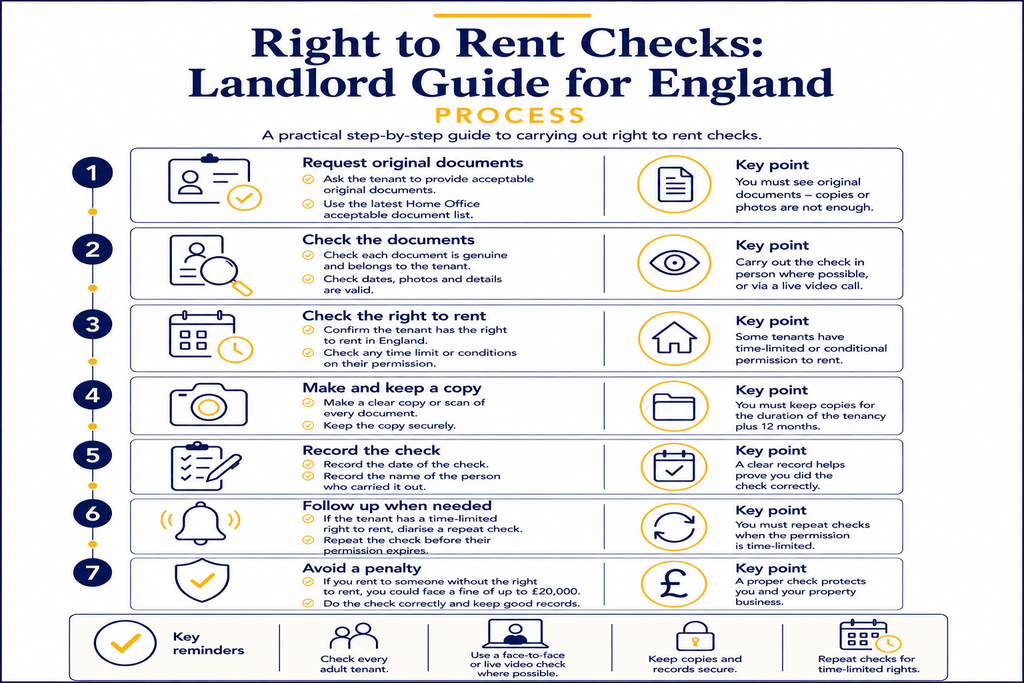
A time-limited right creates a future diary date for a repeat check. Missing that date can create risk later. What matters is the connection between the rule and the next decision. If someone is letting, selling, refinancing, evicting, improving or changing how a property is occupied, the supporting evidence needs to exist before money is spent or notice is served.
The practical risk usually sits in the gap between a simple answer and the evidence needed to prove it. A date, certificate, invoice, tenancy clause, consent letter or council licence can decide whether a landlord is protected. Without that evidence, a reasonable decision can become difficult to defend later. The official position is set out in right to rent, which is why the detail should be checked before relying on an old blog post, template or forum answer.
In London and Essex, the local detail can change the cost and timing of a decision because values, rents, leasehold rules, licensing schemes and contractor costs are rarely modest. A small delay can affect a sale timetable, rent collection, tenant relationship or tax bill. A safer approach is to decide what has to be checked, who is responsible for checking it, and where the record will be stored before the next step is taken. Landlords who want the issue handled as part of a wider property plan can compare this with property management.
Avoiding discrimination in tenant checks
Landlords must not choose who to check based on nationality, name, accent or appearance. The same process should be applied to every adult occupier. The important issue is the connection between the rule and the next decision. If someone is letting, selling, refinancing, evicting, improving or changing how a property is occupied, the supporting evidence needs to exist before money is spent or notice is served.
The risk often appears in the gap between a simple answer and the evidence needed to prove it. A date, certificate, invoice, tenancy clause, consent letter or council licence can decide whether a landlord is protected. Without that evidence, a reasonable decision can become difficult to defend later. The official position is set out in right to rent discrimination, which is why the detail should be checked before relying on an old blog post, template or forum answer.
In London and Essex, local detail can change the cost and timing of a decision because values, rents, leasehold rules, licensing schemes and contractor costs are rarely modest. A small delay can affect a sale timetable, rent collection, tenant relationship or tax bill. A safer approach is to decide what has to be checked, who is responsible for checking it, and where the record will be stored before the next step is taken. Landlords who want the issue handled as part of a wider property plan can compare this with lettings.
Record keeping and audit trail
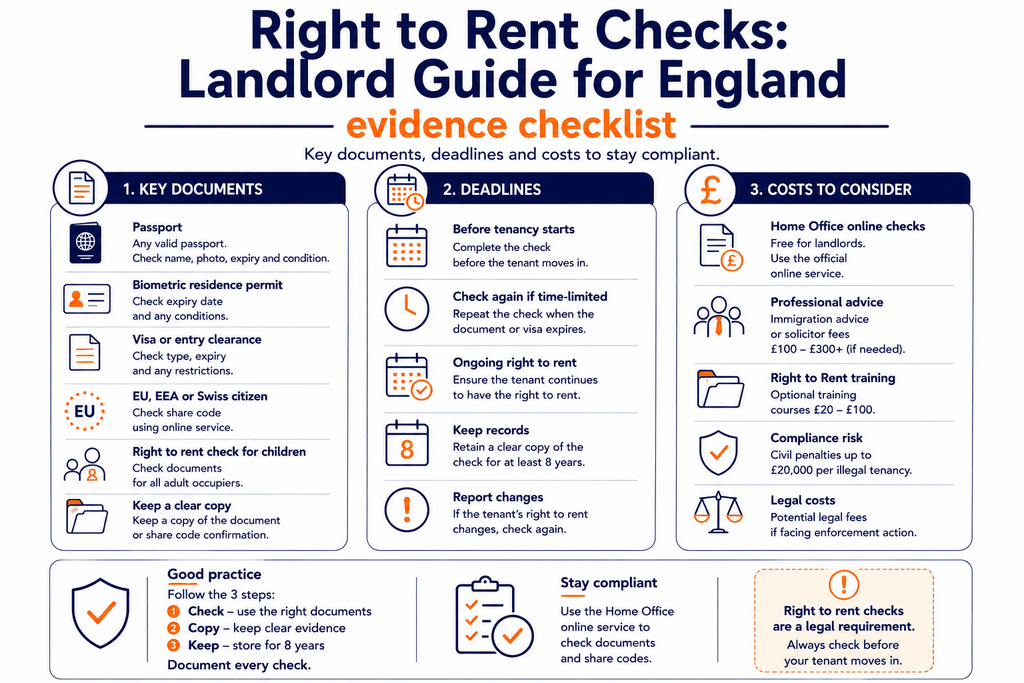
Evidence should be stored securely with the tenancy file. A dated PDF or screenshot can be crucial if questioned later. What matters is the connection between the rule and the next decision. When someone is letting, selling, refinancing, evicting, improving or changing how a property is occupied, the supporting evidence needs to exist before money is spent or notice is served.
The practical risk usually sits in the gap between a simple answer and the evidence needed to prove it. The relevant date, certificate, invoice, tenancy clause, consent letter or council licence can decide whether a landlord is protected. Without that evidence, a reasonable decision can become difficult to defend later. The official position is set out in right to rent, which is why the detail should be checked before relying on an old blog post, template or forum answer.
In London and Essex, the local detail can change the cost and timing of a decision because values, rents, leasehold rules, licensing schemes and contractor costs are rarely modest. A small delay can affect a sale timetable, rent collection, tenant relationship or tax bill. The sensible approach is to decide what has to be checked, who is responsible for checking it, and where the record will be stored before the next step is taken. Landlords who want the issue handled as part of a wider property plan can compare this with compliance inspection.
Agents, guaranteed rent providers and responsibility
The agreement should say who carries out checks and keeps records. Outsourcing the task does not remove the need for clarity. What matters is the connection between the rule and the next decision. If someone is letting, selling, refinancing, evicting, improving or changing how a property is occupied, the supporting evidence needs to exist before money is spent or notice is served.
The practical risk usually sits in the gap between a simple answer and the evidence needed to prove it. A date, certificate, invoice, tenancy clause, consent letter or council licence can decide whether a landlord is protected. Without that evidence, a reasonable decision can become difficult to defend later. The official position is set out in right to rent, which is why the detail should be checked before relying on an old blog post, template or forum answer.
In London and Essex, the local detail can change the cost and timing of a decision because values, rents, leasehold rules, licensing schemes and contractor costs are rarely modest. A small delay can affect a sale timetable, rent collection, tenant relationship or tax bill. A safer approach is to decide what has to be checked, who is responsible for checking it, and where the record will be stored before the next step is taken. Landlords who want the issue handled as part of a wider property plan can compare this with property management.
Frequently Asked Questions
What is the main thing to know about right to rent?
The main point is that right to rent depends on the exact property, agreement, dates and evidence. A general answer is useful only when it is applied to the real documents.
Which documents should be checked?
Check the tenancy or contract, certificates, invoices, notices, correspondence, photos, official guidance and any mortgage, lease or insurance conditions.
Can this create financial risk?
Yes. Mistakes can lead to lost rent, delayed sales, tax errors, deposit disputes, repair costs, enforcement action or legal fees.
When should professional advice be taken?
Take advice where the issue affects tax, ownership, possession, safety, licensing, immigration checks, commercial leases or large repair spending.
What to do next
A landlord who wants practical help with the property side of this issue can start with legal and financial advice, request a valuation enquiry, or speak to the team through contact.